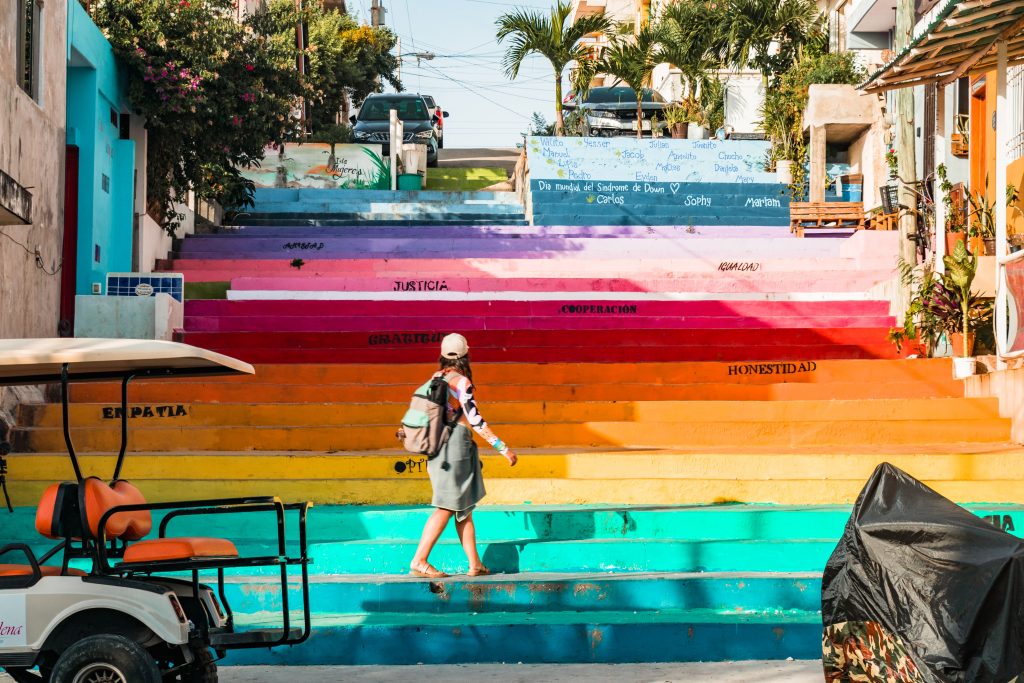
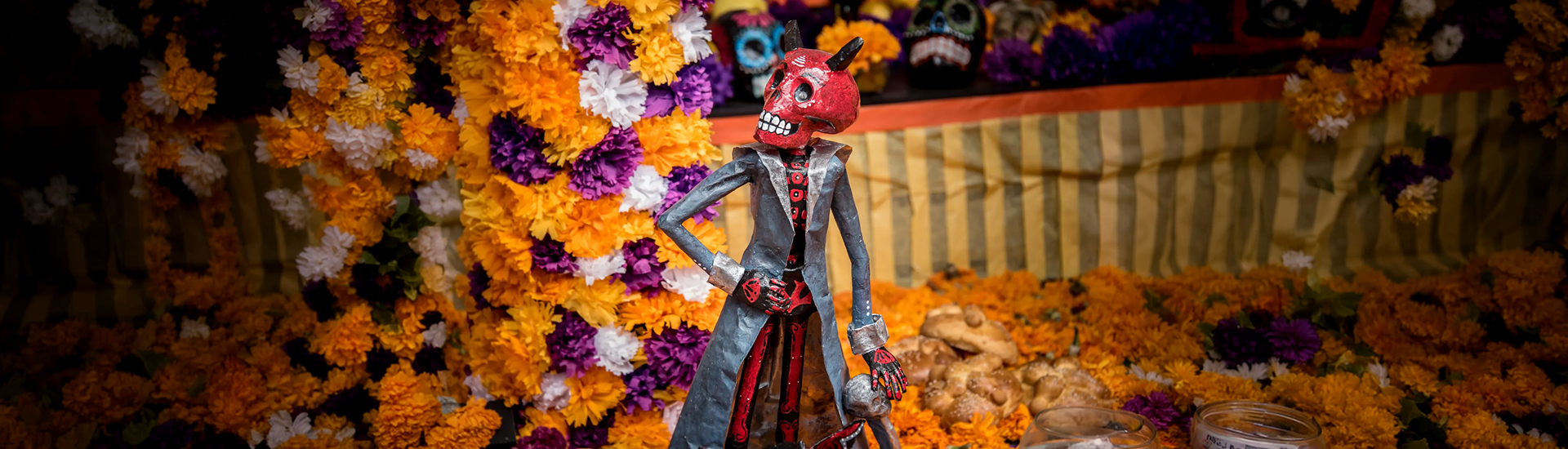
If you have seen a street covered in orange marigolds, painted skull faces, and candles glowing till midnight, then you already know a little bit about Day of the Dead. Día de los Muertos is Mexico’s most famous holiday, and it is celebrated on a scale that no other city even comes close to. And here is the thing that most people don’t know. In Mexico City, it’s not just about one-day celebrations. It is 3 full weeks of parades, giant altars, flower festivals, and candlelit cemetery vigils.
The Day of the Dead in Mexico City celebrations start with the Alebrijes Parade on October 17 and end with thousands of candles in Mixquic on the night of 2nd November. This year, the grand parade falls on Saturday, October 31, which is the same day as Halloween. The Mexico Grand Prix also races on Sunday, November 1st. So, if you are flying in from the UK, the US, or Canada, trust us when we say this is the busiest and most exciting time of the year.
Here is everything you need to plan your Día de los Muertos 2026 trip. It includes dates, an event calendar, the parade route, where to watch it, and how to keep your phone connected with an eSIM for Mexico City.
Day of the Dead Mexico City 2026: Quick Answers
- When is the Day of the Dead 2026? The main days are Sunday, November 1st, and Monday, November 2nd, with many families welcoming the souls of children from October 31.
- When is the Day of the Dead parade in Mexico City? Saturday, October 31st, 2026, at 2 pm. The Day of the Dead parade starts from Glorieta de la Diana Cazadora on Paseo de la Reforma and ends at the Zócalo. It is free to attend.
- Other big dates: Alebrijes Parade on October 17, Mega Procession of the Catrinas on 25th October, Zócalo ofrenda from October 29 to November 2nd, and the Mixquic cemetery vigils from October 31st to November 2.
- Where to stay: Centro Histórico if you want to walk to the parade finish, or Roma Condesa and Juárez if you want food and a quieter night.
- How to stay connected: Install an eSIM for Mexico before you fly so you have data the moment your flight lands.
What is the Day of the Dead (Día de los Muertos)?
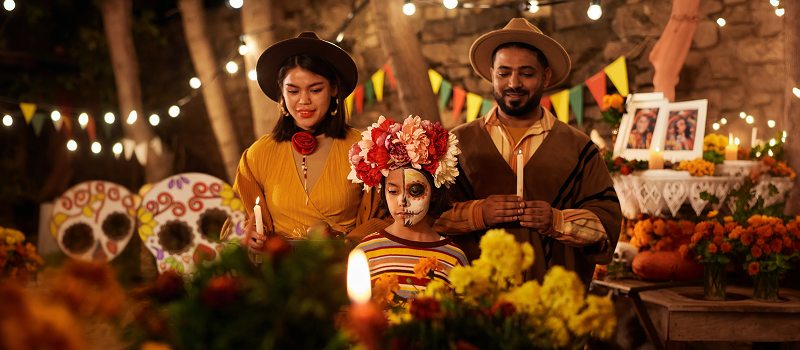
Day of the Dead is the Mexican holiday when families welcome back the souls of the loved ones who have died for one short reunion every year. They build home altars, known as ofrendas, cover graves with marigolds, cook the favorite dishes of the person they lost, and spend the night at the cemetery with music, candles, and stories.
So, if you are wondering whether it is a sad festival, then the answer is no. Day of the Dead is a celebration of life and memory, not a day of mourning. The simple belief behind the festival is that the dead are never really gone as long as someone remembers them.
The tradition mixes with the Indigenous Mesoamerican beliefs, mostly from the Aztec world, with the Catholic feasts of All Saints’ Day and All Souls’ Day that arrived with the Spanish. UNESCO added the Day of the Dead festival to its Intangible Cultural Heritage list in 2008, and today it is celebrated across Mexico, Latin America, and the United States.
Is Day of the Dead the same as Halloween?
No, Halloween is about scaring off the spirits. Día de los Muertos is about inviting them into your home. This year, they both got to share the same date on the calendar.
When is the Day of the Dead 2026?
Day of the Dead 2026 is celebrated on Sunday, November 1st, and Monday, November 2nd, with October 31st as the start day at many places. November 1st is mostly for the souls of the children (locally known as the angelitos), and November 2nd is for adults. Exact traditions change from town to town, so here is the table for the whole lineup of 2026 in and around Mexico City:
| Date | What Happens |
| Saturday October 31st | Grand Day of the Dead parade in Mexico City at 2 pm. In Mixquic, families welcome children’s souls with white petals and sweets. |
| Sunday, November 1st | Día de Todos los Santos takes place, in which children are honored, and in Mixquic, the souls of adults are welcome in the evening. And the F1 Mexico Grand Prix will also take place on the same day. |
| Monday, November 2nd | Día de los Fieles Difuntos is the main day for adults. Cemeteries are at their busiest on the day that ends with La Alumbrada in Mixquic, when thousands of candles are lit on the graves. |
Want to experience the festival atmosphere without the peak crowds? Then we suggest you plan your Day of the Dead holiday between October 24 and November 4th. During this time, you will be able to catch the flower festival, the Catrinas procession, the Grand Parade, the Zócalo Ofrenda, and at least 1 cemetery vigil.
Day of the Dead Mexico City 2026: Full Event Calendar
Mexico City’s Día de los Muertos season runs from October 17th to November 8th, 2026. And during these 3 weeks, there are lots of events that take place and are almost free to attend. So, here are the dates, events, locations, and entry fees confirmed by the city’s official Day of the Dead guide.
| Date | Event | Where | Cost |
| Sat, Oct 17, 12 pm | 18th Monumental Alebrijes Parade | Zócalo to the Angel of Independence via 5 de Mayo, Juárez and Reforma. The giant alebrijes stay on display on Reforma until Nov 8. | Free |
| Oct 17 to 18 | Pan de Muerto and Chocolate Festival | Jalapa 38, Roma Norte | Free entry |
| Oct 18 to Nov 1 | Cempasúchil (marigold) Flower Festival | Paseo de la Reforma, between the Angel of Independence and the Ahuehuete | Free |
| Oct 23 to Nov 8 | “The Path” light installation | Paseo de la Reforma, Ángel de la Independencia to Puerta de los Leones | Free |
| Sat, Oct 24, 7 to 11 pm | Day of the Dead night bike ride (19 km) | Fuente de Petróleos to the Centro Histórico vía Reforma and Avenida Juárez | Free bike rental available |
| Sun, Oct 25, 6 pm | Mega Procession of the Catrinas | Angel of Independence to the Zócalo (arrives around 8:30 pm) | Free |
| Oct 29 to Nov 2 | Monumental Ofrenda | Zócalo | Free |
| Oct 29 to Nov 2 | Community ofrendas at 12 venues | Including Tlatelolco, Coyoacán, and Tlalpan | Free |
| Oct 29 to Nov 4 | Zócalo illumination | Facades around the main square | Free |
| Oct 29 to Nov 4 | Chapultepec festival “The Door Between Two Worlds” with a drone show | Second Section of Bosque de Chapultepec | Check listing |
| Sat, Oct 31, 2 pm | Grand Day of the Dead Parade | Glorieta de la Diana Cazadora to the Zócalo | Free |
| Oct 31 to Nov 2 | Cemetery vigils and La Alumbrada (night of Nov 2) | San Andrés Mixquic, Tláhuac | Free tours around 800 MXN |
| Fri to Sun, Oct 9 to Nov 8, plus Mon, Nov 2 | La Llorona show on the canals | Cuemanco dock, Xochimilco | Around 636 MXN |
| Early November | UNAM Megaofrenda | Ciudad Universitaria | Free |
Day of the Dead Parade Mexico City 2026: Date, Time, Route, and Where to Watch
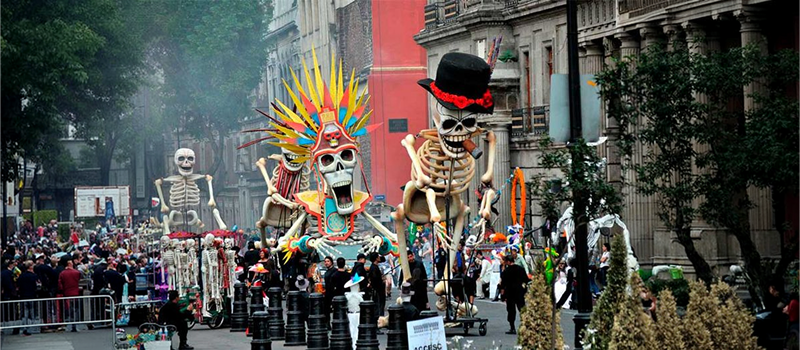
The major highlight of the Day of the Dead festival is its Grand Day of the Dead Parade, known as Gran desfile de Día de Muertos. The parade will take place on Saturday, October 31st, 2026, at 2:00 pm. It starts from the Glorieta de la Diana Cazadora on Paseo de la Reforma and ends at the Zócalo, which is the city’s main square. The entry to the parade is free, and you don’t need a ticket.
And guess what, this parade is younger than you think. It did not exist until the 2015 James Bond Film Spectre opened with a huge Day of the Dead parade in Mexico City. The scene was fictional, but people loved it so much that the city created a real parade in 2016, and now it is the biggest single event in Mexico City.
What will you see in 2026?
At the Grand Day of the Dead parade 2026, you will witness marching bands, dancers, mojigangas (giant puppets), and dozens of huge floats that tell the story of the soul’s journey to Mictlan (the Aztec underworld). This year’s floats include a tribute to singer Juan Gabriel, film director Emilio “El Indio” Fernández, and the Red Queen of Palenque. Plus, there will be lucha libre-themed vehicles and a UNICEF contingent.
What is the Grand Day of the Dead Parade route for 2026?
Glorieta de la Diana Cazadora roundabout -> Padeo de la Reforma -> Centro Histórico -> Zócalo.
Best Places To Watch the Grand Day of the Dead Parade
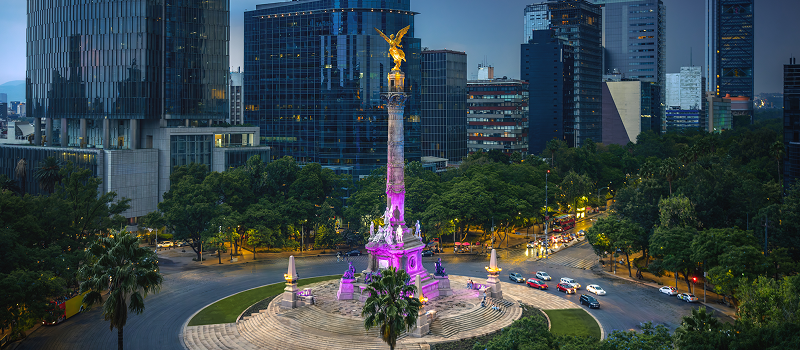
1. Paseo de la Reforma, near the Angel of Independence: there are wide sidewalks and the marigold festival on both sides of the boulevard. This is the best spot for families to see the Grand Day of the Dead Parade, offering the best photo opportunities because you see the floats early, before they slow down.
2. Avenida Juárez and the Alameda Central: The floats pass with the Palacio de Bellas Artes behind them, making one of the most photogenic stretches on the route. It fills up very fast, so reach early to get a good spot.
3. The Zócalo: The final stop of the parade with the Monumental Ofrenda and its 32-meter Catrina in the same square. It is also the most crowded spot on the route, so arrive early.
Tips for Parade Day to Keep in Mind:
1. Arrive 2 to 3 hours early, as the crowds at the best places fill up fast.
2. Take the metro, not the car, as many routes will be either diverted or closed temporarily.
3. Pick a meetup location for your group to regroup, like a cafe corner, which can save lots of hassle.
4. Keep your belongings close by using a zip-pocket cross-body bag or a phone strap.
Traveler’s Tip: When there are millions of people at the same venue, you need reliable internet connectivity to use maps and stay connected with your group without hunting for Wi-Fi. Install a Maya Mobile eSIM before you fly, and your internet is sorted before you even reach Reforma.
Best Places To Celebrate Day of the Dead in Mexico City
The best places to celebrate Día de los Muertos in Mexico City are the Zócalo and Paseo de la Reforma. Here’s what each one of the best places has to offer:
1. Zócalo and the Centro Histórico
The Zócalo is the heart of the civil celebration. From October 29 to November 2nd, the square holds the Monumental Ofrenda. In 2026, it honors José Guadalupe Posada’s Catrina with a 32-meter papier-mache sculpture, sawdust carpets, and thousands of marigolds. The surrounding buildings throughout the area are lit with skulls, skeleton hummingbirds, and xoloitzcuintle dogs until November 4th.
- Best For: First-timers attending the festival
- When to go: After dark, when the lights are on.
- Getting there: Take the metro to Allende or Bellas Artes, then walk a few blocks, as stations right next to the square may be closed for major events.
2. Paseo de la Reforma
Reforma turns into an open-air gallery during the Day of the Dead festivities. The marigold flower festival runs from October 18th to November 1st. 140 growers from Xochimilco, Tláhuac, and Milpa Alta sell flowers between the Angel of Independence and the Ahuehuete. The giant alebrijes stay on display until November 8th, and “The Path” light installation glows from October 23rd.
- Best For: Evening walk, photos of the flower festival, and watching the parade.
- When to go: Late afternoon into the night, so that you can experience the flower festival in the afternoon and the light installation at night.
3. Coyoacan
Coyoacan is a small town inside the city with more local and historic celebrations. Its historic center fills with traditional altars, local fairs, and markets selling sugar skulls. Moreover, it is also one of the 12 community ofrenda venues that the city sets up from October 29 to November 2nd. You can pair your visit with a visit to the Frida Kahlo Museum and other things to do in Mexico City.
4. Xochimilco
During the Day of the Dead festival, Xochimilco’s ancient Aztec canals come alive with different experiences. You can take a night trajinera (boat) tour past the altars built right on the chinampas (floating islands). These boats feature live Mariachi music, storytelling of local legends, and hot atole with pan de muerto.
Or you can also book the La Llorona Night Show at the Embarcadero de Cuemanco. It is a 1-hour iconic live performance that merges historic pre-Hispanic dance and Mexico’s most famous ghost legend performed on the water. Most of the theatrical performances are in Spanish.
- Best For: To experience something spooky and unforgettable.
- Getting there: Take the Metro Line 2 at Tasqueña and the Tren Ligero to Xochimilco, then a short taxi to Cuemanco.
5. San Andrés Mixquic
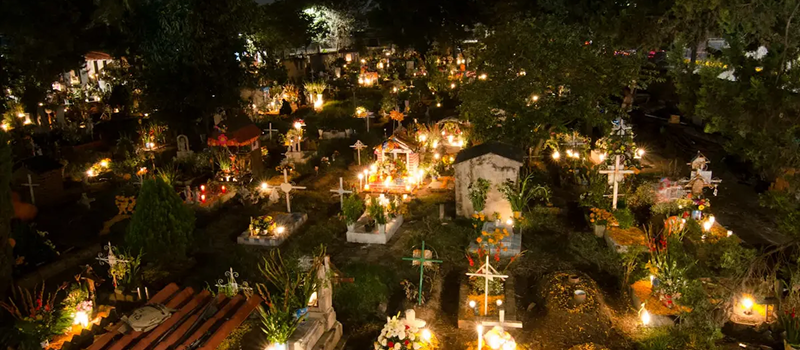
If you want to experience the Day of the Dead most authentically and traditionally, don’t forget to visit San Andrés Mixquic. This town in the Tláhuac borough has a history of more than 500 years. On October 31st, families welcome the children’s souls, and on November 1st, celebrations for adult souls happen. And on the night of November 2nd, the La Alumbrada ( the lighting) ceremony takes place. On this night, the place goes dark, and families light thousands of candles and fill the graves with marigolds to illuminate the path back for the souls of the deceased.
6. Bosque de Chapultepec
From October 29 to November 4th 2026, the second section of the Chapultepec Park hosts “The Door Between Two Worlds.” It is an immersive experience of the Day of the Dead festival along the Cempasuchil Trail with music, food, dance, altars, and a nighttime drone show.
Day of the Dead Traditions and Symbols
The most important elements of the Day of the Dead traditions are the ofrenda (altar), marigold flowers, La Catrina, sugar skulls, and the all-night cemetery vigil. Here’s what every tradition means:
1. Altar de Muertos ( the ofrenda)
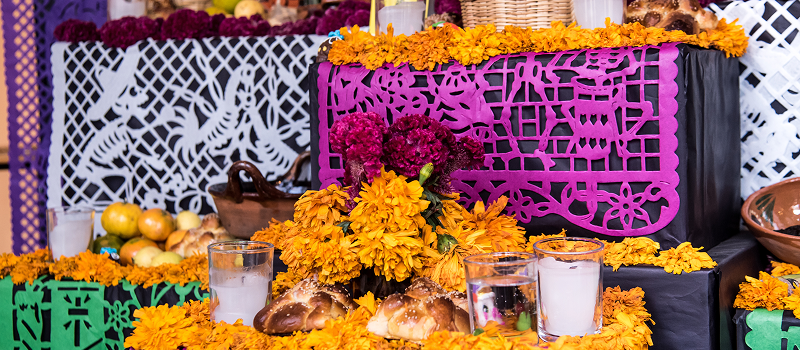
Altar de Muertos are the center of the celebrations, which families set up at home or on the graves, usually in 2, 3, or 7 levels. The ofrenda at the Zócalo is the biggest in Mexico City. They fill these ofrendas with:
- A photo of the person being remembered
- Their favorite food or drink ( it can be anything)
- Water for the tired soul after its long journey, and salt for purification
- Candles to light the way and copal incense to clean the space
- Pan de muerto, sugar skulls, and papel picado ( cut tissue paper banners)
- Personal objects like a hat, watch, toy for children, etc.
2. Marigold and other Day of the Dead flowers
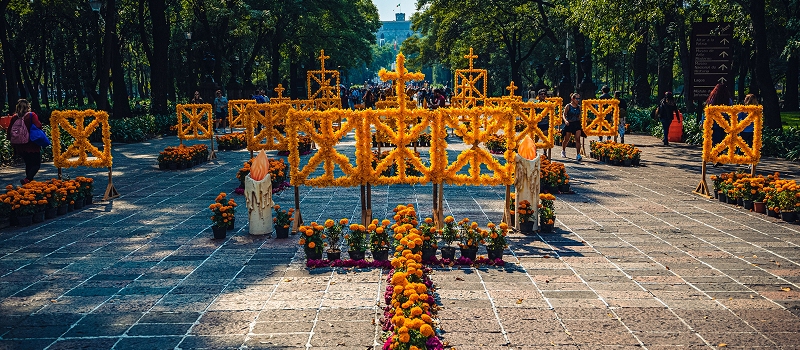
The orange marigold is the official flower of the Day of the Dead festival, locally known as cempasuchil. It is believed that its bright color and strong smell guide the souls from the cemetery to the family altars. That is the reason why you will see petal paths leading to the entrance and doorways. Other Day of the Dead flowers include deep red cockscomb and white baby’s breath, which are commonly used for the souls of deceased children.
3. La Catrina
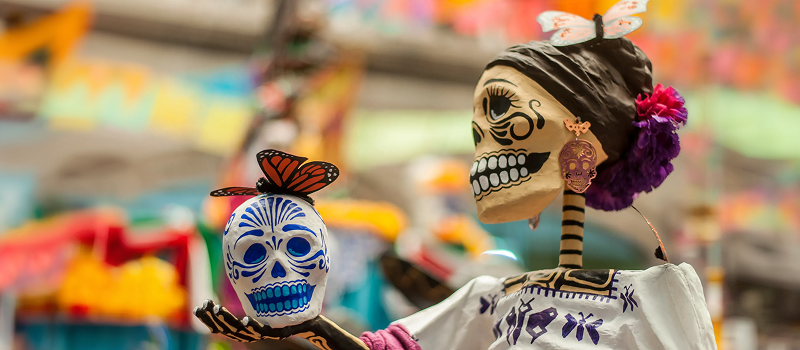
La Catrina is the elegant skeleton lady in a big feathered hat, and in today’s time, she is the most popular face of the Día de los Muertos. Printmaker José Guadalupe Posada created her in the early 1900s as La Calavera Garbancera (a joke). Diego Rivera later gave her the name Catrina. The simple message behind this is that, rich or poor, we all end up as skeletons. That’s why so many people at the parade paint their faces as Catrinas and Catrines.
4. Sugar Skull
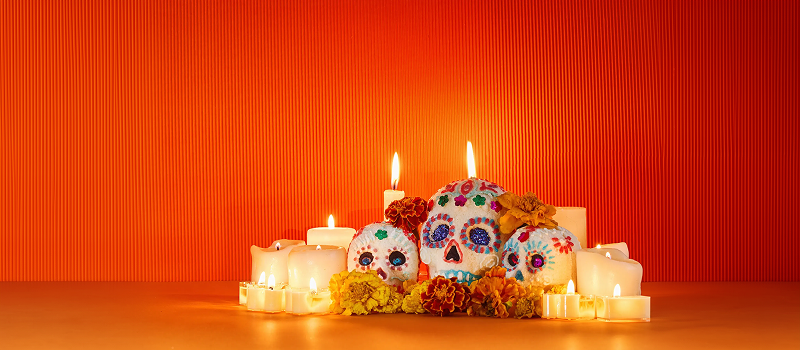
Sugar skulls are small decorated skulls made up of sugar, chocolate, or amaranth, often with a name written on the forehead. They are placed on altars for the souls and given to friends as gifts.
Mexico City During Día de los Muertos: Travel Tips
You are in the city and imagine marigold petals on the sidewalk, the smell of fresh pan de muerto drifting out of every bakery, and a brass band warming up for the festival. That’s Mexico City in the last weeks of October. It is magical, but it is also packed, and in 2026, it is also the F1 Mexico Grand Prix weekend. So, book your stay now, plan your public transportation routes, carry some cash, and set up your data connection before you fly.
Where to Stay in Mexico City During Day of The Dead
Some of the locations you consider for the Day of the Dead celebrations are Centro Histórico, Juárez, the Reforma area, Roma, Condesa, and Coyoacán.
Weather and What to Pack?
Late October and early November are the start of the dry season in Mexico City. You can expect sunny days around 22°C and temperatures to drop during the night to around 9 to 11°C. So if you are planning to explore the city at night or attend night vigils, we recommend carrying a light jacket or packing layers. Stay hydrated, as Mexico City sits at 2,240 meters, and go easy on Mezcal (a local alcoholic beverage) on day 1.
Getting Around Mexico
1. Fly into Mexico City International Airport (MEX). Some flights also use Felipe Ángeles Airport (NLU), which is further away from the central area. So check before booking flight tickets to Mexico City.
2. Use the metro and metrobuses as they are cheap and help you to skip traffic during the Day of the Dead festival. You can also buy a rechargeable Mobility Integrated Card (Tarjeta de Movilidad Integrada).
3. Use Uber or DiDi for late nights and trips to Mixquic or Xochimilco. Street taxis are also fine, but apps are easier when you don’t know Spanish.
4. Don’t drive, as there can be road closures on Reforma and in the Centro area.
Best eSIM for Mexico City: Staying Connected During the Day of the Dead
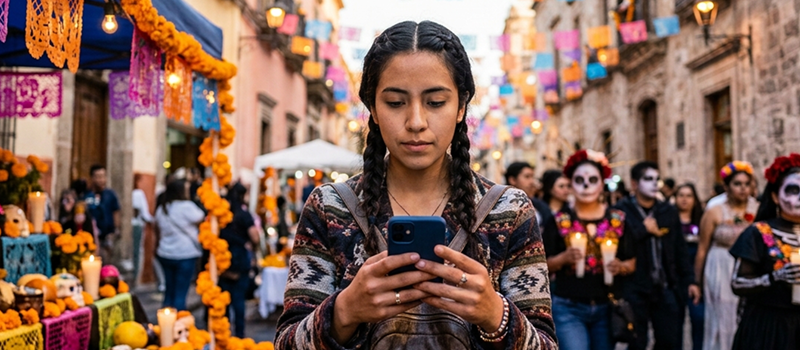
The best eSIM for Mexico City is the one you install at home before you even fly, switches on when you land in the city, and gives you unlimited data. During Día de los Muertos, you will use your phone for much more than photos, like metro maps, booking cabs, Google Translate, booking tours, and many more.
That’s exactly when Maya Mobile is the best eSIM Mexico. You get an eSIM that works in Mexico and 165+ other destinations. You install it once before you fly, and you are online before you even reach the baggage claim.
Can I get a digital eSIM card for Mexico before I leave?
Yes, you can buy and install an eSIM for Mexico from home using your Wi-Fi, days before your flight. With Maya eSIM, you can also have multiple eSIMs under one account.
How to get an eSIM Mexico in 5 Steps:
- Check your phone; it must be unlocked and eSIM-compatible. Dial *#06#, and if you see an EID number, you are good to use an eSIM.
- Download the Maya Mobile app and pick your eSIM Mexico for a 3, 7, 14, or 30-day plan based on your travel plans.
- Install the eSIM at home through Wi-Fi in just 2 minutes.
- Turn on your Maya eSIM as soon as your flight lands. Your plan is active, and you’re connected.
- Turn on data roaming for Maya line in your phone settings and keep your home SIM for calls, texts, etc.
Telcel eSIM vs. Maya Travel eSIM: Which one is better?
Choose Telcel eSIM if you are planning to stay long-term or need a Mexican number for local bookings, like a home rental. Choose Maya Mobile eSIM Mexico if you want a simple, easy-to-install plan for your trip to Mexico, and 1 SIM that works in other countries as well. Moreover, to get a Telcel eSIM, you need to have an ID check with passport registration and a face check. None of this is required to install Maya eSIM.
Planning A Multi-Country Trip? Get a Latin America eSIM That Goes Further
Many travelers pair Mexico’s Day of the Dead with Oaxaca, Guatemala’s Kite Festival, or Peru. With a regular Latin America eSIM, you may need to buy a plan at every border crossing. However, with Maya Mobile, the 1 eSIM keeps working in every country on your itinerary. So, it is the easiest eSIM for international travel to get if your plan includes different countries.
Day of the Dead Mexico City – FAQs
- What is the day of the dead?
Day of the Dead, also known as Día de los Muertos, is a Mexican holiday observed on November 1st and 2nd, when families welcome the souls of their deceased loved ones. They celebrate by creating altars, marigold pathways, and the deceased’s favorite foods, and by holding cemetery vigils.
- When is the Day of the Dead in Mexico City?
In Mexico City, the Day of the Dead events run from October 17 to November 8, 2026. The Grand Parade is on Saturday, October 31st, from 2 p.m. onward. The Zócalo Ofrenda is open from October 29 to November 2nd.
- Is the Day of the Dead Grand Parade free?
Yes, the Grand Day of the Dead parade is free to enter. Just arrive early at any of the best places to get your spot for the best views and photos.
- What is the best eSIM for Mexico City?
Maya Mobile eSIM Mexico is the best because it offers unlimited data, is easy to install at home with Wi-Fi, uses a single SIM that covers 165+ countries, and requires no passport registration or swapping the home SIM card.
- What is the best food for the Day of the Dead Mexico festival?
Pan de Muerto is the signature dish of the Day of the Dead festival. It is a soft, sweet, round bread flavored with orange blossom, topped with dough shaped like bones, and dusted with sugar. You will find classic versions at old bakeries like El Globo and Pasteleria Ideal. If you are in the city early, then don’t miss the Pan de Muerto and Chocolate Festival in Roma on October 17 and 18th.
- Where else is Day of the Dead celebrated?
Day of the Dead is celebrated in many parts of Latin America and US cities with large Mexican communities. Some of the places in Latin America are Guatemala, Bolivia, Ecuador, Peru, Brazil, Haiti, and more. San Antonio, Los Angeles, Tucson, Chicago, and San Francisco are some of the cities in the United States.
Celebrated the Day of the Dead in Mexico City with Maya Mobile eSIM
Day of the Dead in Mexico City is one of those trips that stays with you for years. The marigolds on the Reforma, the floats rolling into the Zócalo, the hush in the Mixquic when the candles come on. All of these unique experiences make your trip to Mexico City memorable. To have a smooth trip, book well in advance and travel respectfully.
And before you board your flight to Mexico City, set up your internet connection by installing the Maya Mobile eSIM Mexico. It covers 165+ countries, offers unlimited data, a hotspot to share with your group, and no SIM queue at the airport. So, install the Maya app before you fly so that you can share your first photo of the Marigold Festival, ready to post. Plans for eSIM Mexico start at $3.33/day.