Choosing between an eSIM with a phone number and a data‑only eSIM can be confusing if you’re not sure what each offers. Both serve different connectivity needs and can change how you use your phone when traveling, managing multiple networks, or cutting down on physical SIM cards.
Understanding their differences helps you pick the right setup for your lifestyle, whether you need full calling features or just fast mobile data. This guide explains how each type of eSIM works, what makes them distinct, and which one fits best for everyday users or frequent travelers.
What is an eSIM?
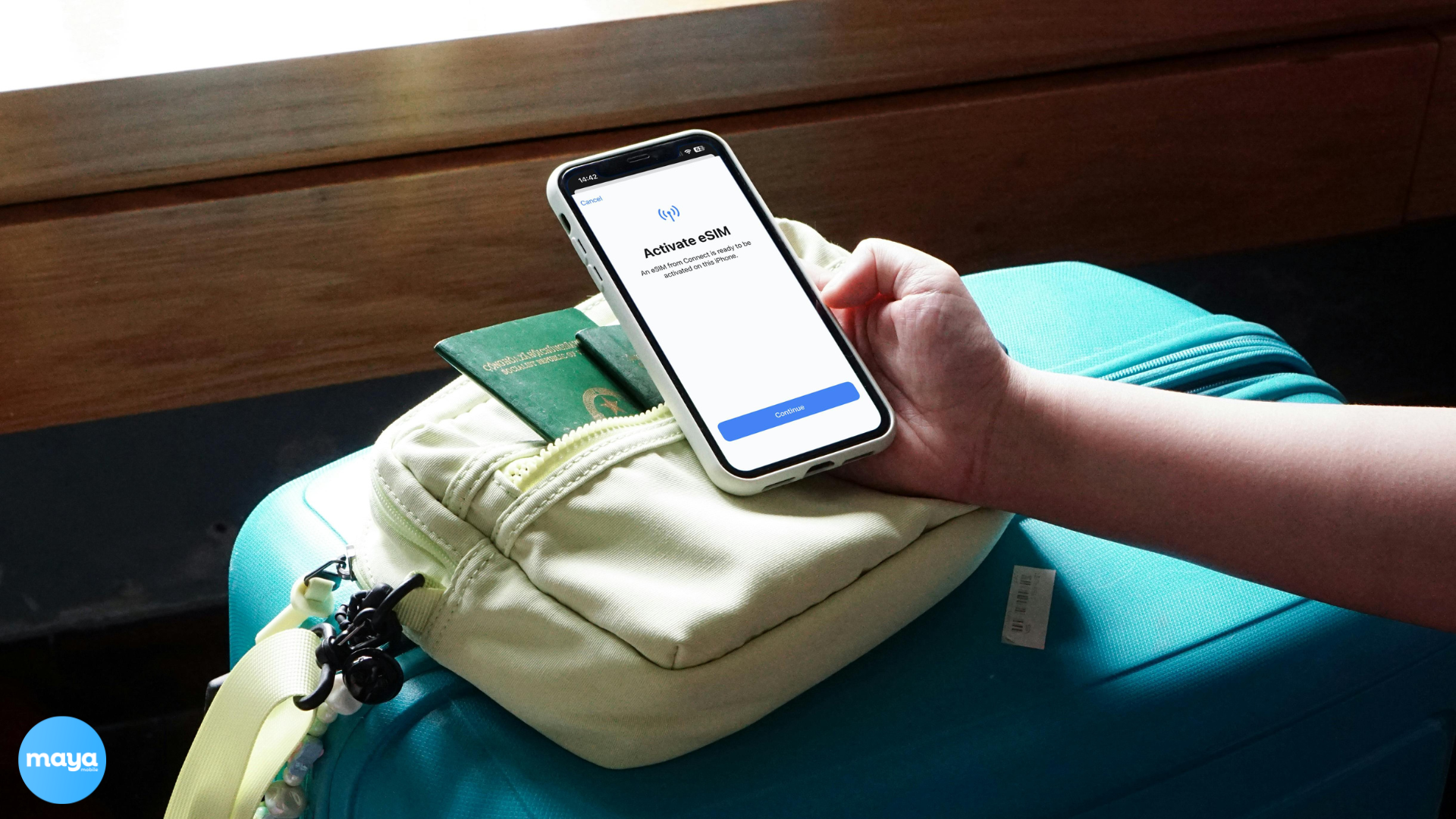
An eSIM (embedded SIM) is a digital version of the traditional SIM card that’s built right into your phone or device. Instead of inserting a physical SIM, you can activate a mobile plan digitally by scanning a QR code or using an app; no need for swapping tiny cards ever again!
With eSIM, you can:
- Store multiple mobile plans on one device.
- Switch between carriers instantly (great for travel).
- Stay connected without waiting for a physical SIM delivery.
eSIMs are becoming standard on most modern smartphones, tablets, and even smartwatches. They’re secure, convenient, and give you the freedom to manage your connectivity on the go.
With these advantages, it’s easy to see why eSIM technology is transforming how we connect. Now, let’s explore the different types of eSIMs available.
Types of eSIMs
eSIMs come in two main types: with a phone number and data-only. Each serves a distinct purpose depending on your communication needs and travel patterns.
eSIM with Phone Number
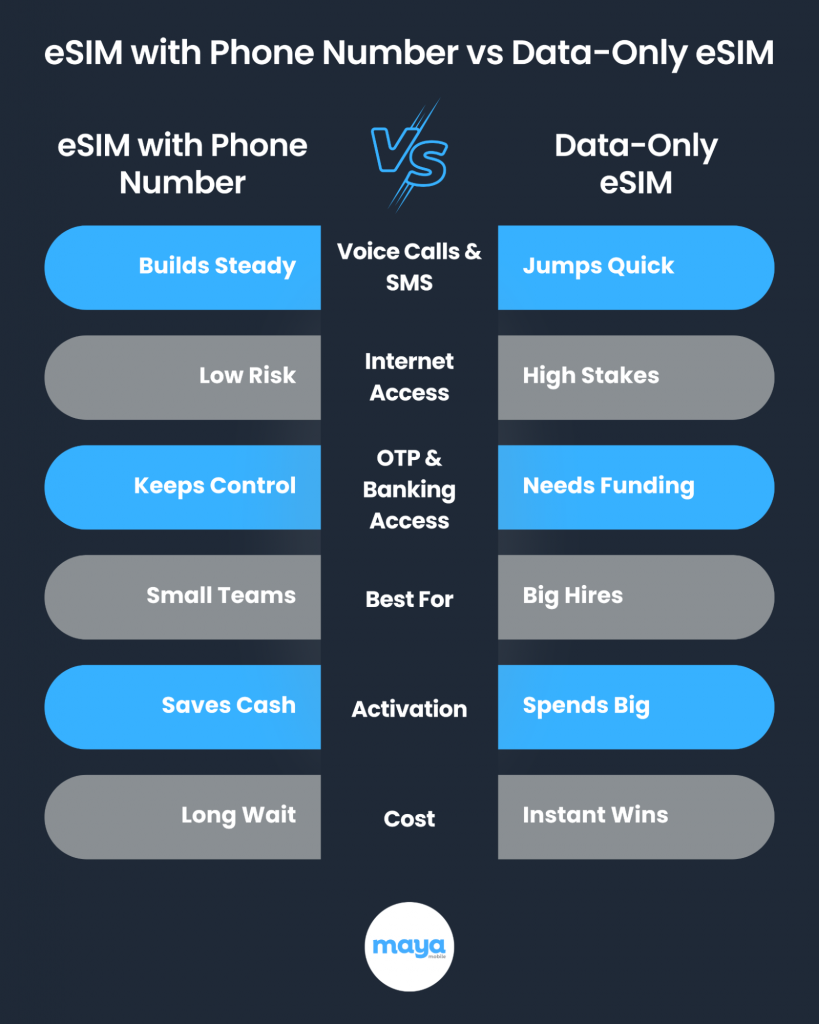
An eSIM with a phone number works just like your regular mobile plan. It includes a local number and allows you to make and receive calls, send SMS messages, and access mobile data.
This type of eSIM is ideal for:
- Users who need voice and text capabilities.
- Business professionals who rely on OTP verifications and banking SMS.
- Anyone staying long-term in a specific country or region.
Data-Only eSIM
A data-only eSIM gives you internet access without a phone number. It’s designed mainly for browsing, streaming, and using online apps such as WhatsApp, Telegram, or FaceTime over the internet.
It’s perfect for:
- Travelers who want to avoid roaming fees.
- Remote workers who need global connectivity.
- Short-term users who just need data for navigation, maps, or messaging apps.
How to Choose the Right eSIM
Choosing between an eSIM with a phone number and a data-only eSIM depends entirely on how you plan to use your device. Here’s a simple guide to help you decide which one suits your needs best.
1. Identify Your Primary Use Case
Ask yourself:
- Do you need to make and receive calls or SMS while using the eSIM?
- Or do you just need internet access for browsing, maps, messaging apps, and social media?
If your answer is calls and texts → go for an eSIM with a phone number. If your answer is just internet access → choose a data-only eSIM.
2. Consider How Long You’ll Stay
- Short trips (a few days or weeks): A data-only eSIM is usually enough. It’s affordable, easy to activate, and perfect for travel or temporary connectivity.
- Long stays or relocation: If you’re moving or staying abroad for months, an eSIM with a phone number gives you local presence, useful for work, local services, and verifications.
3. Think About Your Communication Apps
If you use WhatsApp, Telegram, FaceTime, or Messenger, you don’t actually need a phone number tied to your eSIM. These apps work perfectly fine on a data-only connection once they’re registered with your existing number.
However, if you rely on SMS-based authentication (like banking or 2FA), you’ll need an eSIM with a phone number.
4. Evaluate Your Budget
- Data-only eSIMs are generally cheaper and flexible, letting you buy regional or country-based data bundles.
- eSIMs with phone numbers tend to cost more because they include voice and messaging features, but they’re more complete if you need full mobile functionality.
If you travel often, combining both can be cost-effective: Keep your main number active with a phone-number eSIM, and add a data-only eSIM for international data access.
5. Check Device Compatibility
Before purchasing, make sure your device supports eSIM and multiple profiles. Most newer iPhones, Google Pixels, and Samsung models do, but it’s always good to confirm with your device settings or provider’s compatibility list.
6. For Frequent Travelers: Use a Dual Setup
The smartest setup for frequent travelers is a dual eSIM approach:
- Keep your home country eSIM (with number) active for calls and OTPs.
- Add a data-only eSIM for local data wherever you go.
This gives you the best of both worlds: you stay reachable while enjoying affordable, high-speed internet abroad.
Ideal Use Cases for Each eSIM Type
Each eSIM type caters to specific user needs. Here’s how to decide when each option makes sense:
eSIM with Phone Number: When You Need Complete Mobile Connectivity
An eSIM with a phone number is best suited for people who need full communication capabilities, not just data. It gives you everything a traditional SIM offers, but with the flexibility of digital activation.
Best for:
- Business Professionals – Stay reachable for client calls and business SMS anywhere.
- Expats or Long-Term Travelers – Get a local number for banking, deliveries, or local contacts.
- Users Needing OTPs and Verifications – Receive authentication codes from banks or online services.
- Primary Mobile Users – Anyone using their eSIM as their main mobile connection for calls, texts, and data.
Example scenario:
You’ve moved abroad for six months and need a local number for work, apps, and banking. A phone-number eSIM lets you make calls, receive SMS, and stay verified with local services, all without a physical SIM.
Data-Only eSIM: When You Need Internet Without the Extra Cost
A data-only eSIM is ideal for users who mainly depend on internet-based communication, using apps like WhatsApp, Telegram, or Zoom, and don’t require traditional calling or SMS.
Best for:
- Frequent Travelers – Stay connected abroad with affordable data, no roaming charges.
- Digital Nomads – Access reliable internet while working remotely in different countries.
- Short-Term Visitors or Tourists – Quick setup for navigation, browsing, and social media during trips.
- Secondary Device Users – Perfect for tablets, smartwatches, or secondary phones used for browsing or work.
Example scenario:
You’re on a two-week trip to Europe. Instead of paying expensive roaming charges, you install a data-only eSIM before your flight. You can use Google Maps, WhatsApp, and email the moment you land, all without needing a local SIM or physical store visit.
Finding the Right eSIM for Your Connectivity Needs
Choosing between an eSIM with a phone number and a data-only eSIM depends on how you stay connected, whether for calls, verifications, or seamless data while traveling. Both options offer flexibility, and combining them can give you the best of both worlds.
With Maya Mobile, you can easily explore reliable global eSIM plans designed for travelers, remote professionals, and frequent flyers. Enjoy instant activation, transparent pricing, and worldwide coverage that keeps you connected wherever you go.
Related Reads
How Long Does It Take to Activate eSIM? Explained
Unable to Transfer Phone Number eSIM? What to Check
FAQs on Travel eSIM
1. Do data-only eSIMs have a phone number?
Most data-only eSIMs do not come with a phone number – since there is no need for one – and even if they do have a phone number, you are not able to call or send messages with that eSIM.
2. What does it mean if eSIM is data-only?
A data-only eSIM provides your device with the data it needs to connect to the internet, but not a phone number you can pass out to friends and family. Don’t fret, though. You can absolutely still make and receive calls with an eSIM.
3. Can I receive SMS on data only eSIM?
Telephony services like Texts(SMS) and calls are not possible using a Data-only eSIM. However, you can use internet-based calls and messages. Please note that if you plan to use third-party apps for calling or texting over the internet, ensure that you already have it set up before using your eSIM.
4. Can I use both eSIM types at once?
Yes, if your device supports dual SIM functionality, you can use an eSIM with a phone number alongside a data-only eSIM simultaneously. This setup lets you manage calls on one eSIM while using the other exclusively for data, offering flexibility for different needs like travel or work.
5. Is eSIM available for prepaid or postpaid plans?
eSIMs are available for both prepaid and postpaid plans. Most mobile carriers support eSIM activation for either type, allowing users to choose based on their budget and usage preferences without needing a physical SIM card.