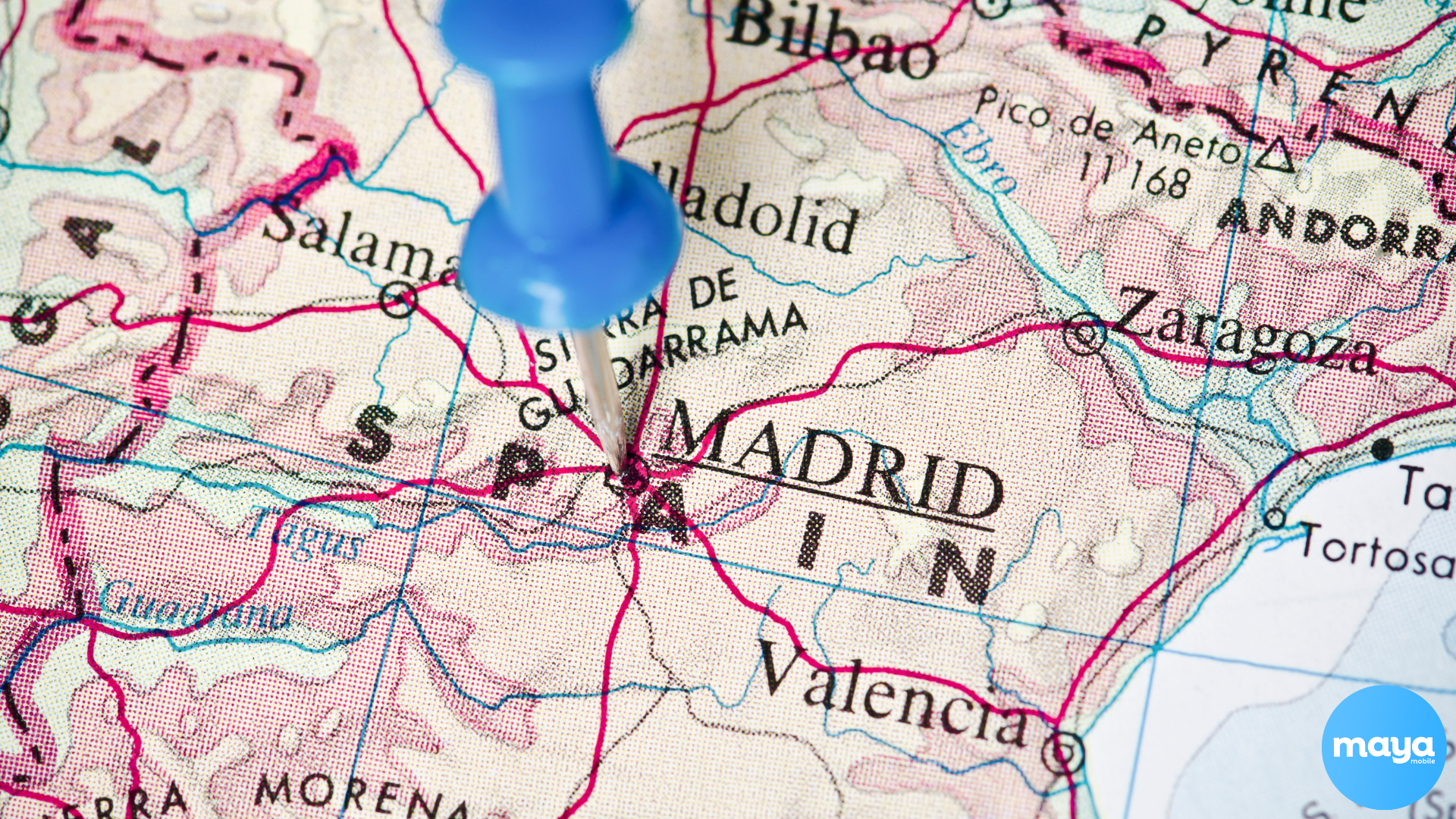
Madrid, the vibrant capital of Spain, is a city where history, culture, and modern life blend seamlessly. From world-renowned museums that form the “Golden Triangle of Art” to majestic royal palaces, grand plazas, and unique landmarks, Madrid offers endless opportunities for discovery. Visitors can admire masterpieces at the Prado Museum, explore contemporary creativity at the Reina Sofía, or stroll through the elegant Royal Palace and bustling Plaza Mayor.
With lush parks, ancient walls, and even the world’s oldest restaurant, Madrid is a destination that celebrates both tradition and innovation, making it a must-visit for travelers seeking culture and history.
Cultural Places (Museums and Artistic Heritage)
Beyond its royal palaces and historic plazas, Madrid stands out as a cultural capital of Europe, home to world-renowned museums, priceless art collections, and iconic institutions that reflect Spain’s rich artistic heritage.
Prado Museum (Museo del Prado)
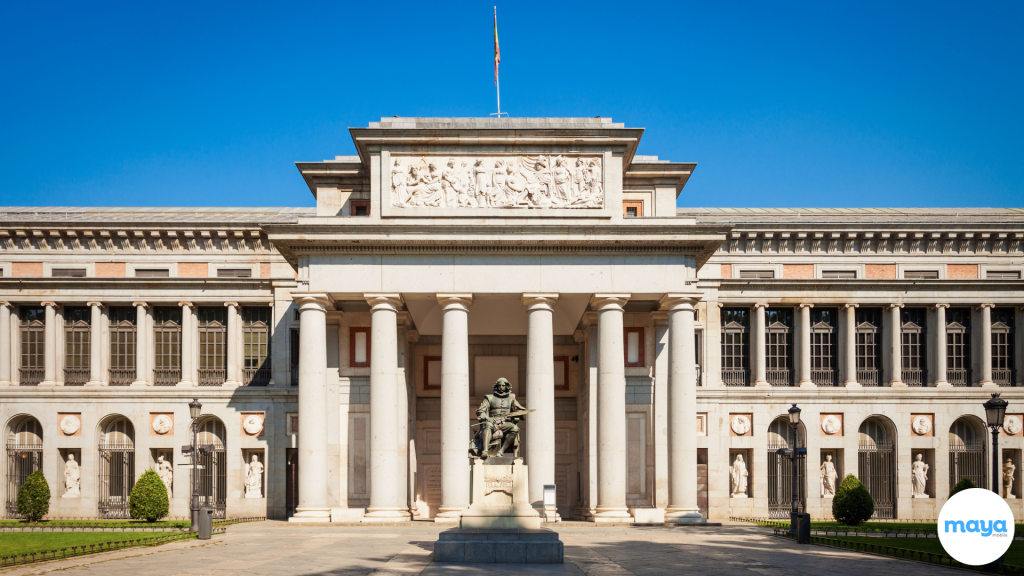
The Museo del Prado isn’t just Spain’s top art museum; it’s one of the world’s finest showcases of European art. Opened in 1819, this grand gallery originally began as a natural sciences building designed by Juan de Villanueva in 1785. Later, King Ferdinand VII, inspired by Queen María Isabel de Braganza, transformed it into the artistic landmark it is today.
The Prado’s collection spans from the 12th to the early 20th century, celebrating the brilliance of the Spanish, Italian, and Flemish schools. As you explore its elegant halls, you’ll come face to face with works by masters like Velázquez, Goya, El Greco, Bosch, and Titian, each offering a window into Europe’s artistic soul.
Must-See Masterpieces
- Las Meninas (1656) by Diego Velázquez – The Prado’s most famous masterpiece.
- The Third of May 1808 (1814) by Francisco de Goya – A moving depiction of resistance against Napoleon.
- The Garden of Earthly Delights (c. 1490–1510) by Hieronymus Bosch – A surreal and symbolic triptych.
- The Nobleman with his Hand on his Chest (c. 1580) by El Greco – A hallmark of Spanish Renaissance portraiture.
- The Annunciation (1430–1432) by Fra Angelico – A luminous example of early Italian Renaissance art.
Thyssen-Bornemisza Museum (Museo Nacional Thyssen-Bornemisza)
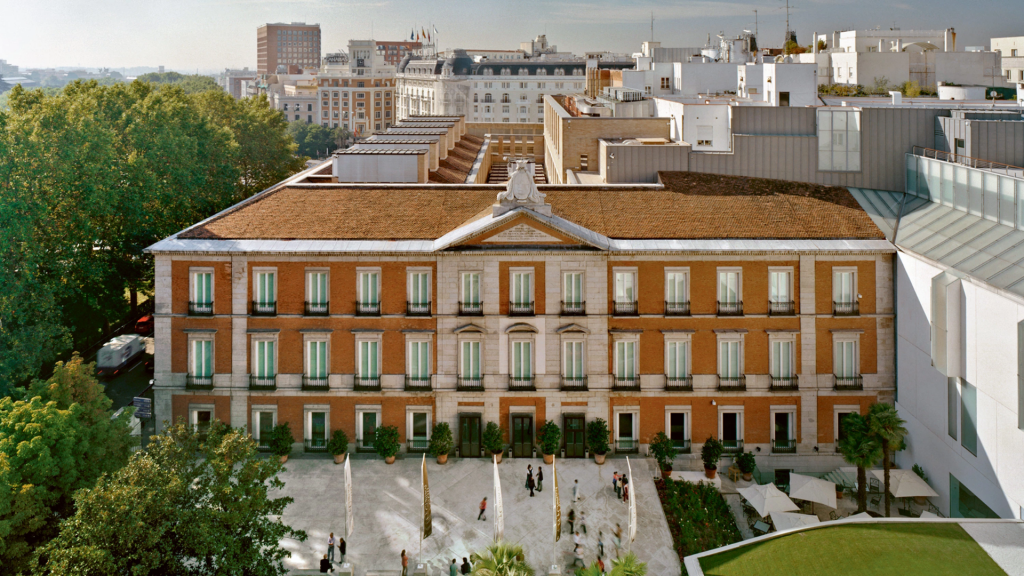
Image Credits – Arquitectura Viva
The Museo Nacional Thyssen-Bornemisza, opened in 1992, completes Madrid’s famous “Golden Triangle of Art” alongside the Prado and Reina Sofía. Set within the graceful Palacio de Villahermosa, the museum began as the remarkable private collection of the Thyssen-Bornemisza family, later acquired by the Spanish state.
What makes the Thyssen so special is its incredible range. The collection offers a sweeping overview of Western art from the 13th to the late 20th century, filling in the stylistic and historical gaps between Madrid’s other two major museums. Here, you can wander through rooms that flow seamlessly from Italian Renaissance to Dutch Baroque, then on to Impressionism, Expressionism, and even Pop Art. It’s a journey through centuries of changing tastes, styles, and visions.
Must-See Works
- Annunciation (c. 1370) by Simone Martini – An exquisite example of Gothic art.
- Portrait of Giovanna Tornabuoni (1489–1490) by Domenico Ghirlandaio – A jewel of Renaissance portraiture.
- Venus and Cupid (1525) by Hans Holbein the Younger – Rich in allegorical meaning.
- Waterloo Bridge (1903) by Claude Monet – A highlight of the Impressionist gallery.
- Woman in Bath (1963) by Roy Lichtenstein – A striking piece of Pop Art.
National Archaeological Museum of Spain (Museo Arqueológico Nacional)
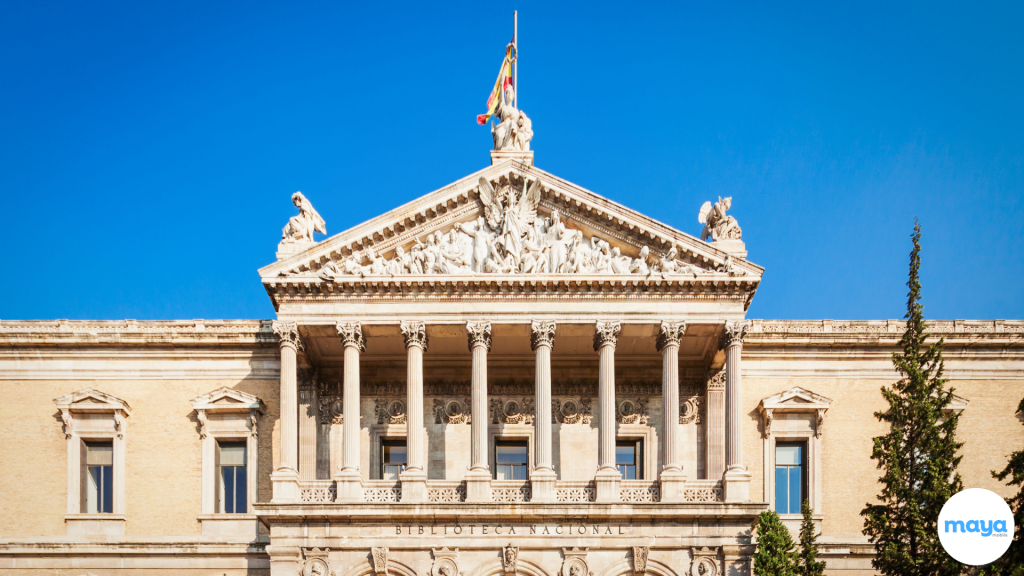
The Museo Arqueológico Nacional (MAN) is where Spain’s ancient past comes to life. Founded back in 1867 by Queen Isabella II, this fascinating museum on Calle de Serrano shares its grand neoclassical home with the National Library.
After a major makeover between 2008 and 2014, the museum reopened with fresh, modern galleries and interactive exhibits that make history feel surprisingly alive. As you wander through its halls, you’ll trace the story of the Iberian Peninsula, from prehistoric tribes and Roman settlers to Islamic art and medieval Spain. It’s the perfect place to see how Spain’s incredible mix of cultures has shaped the country we know today.
Must-See Artifacts
- The Lady of Elche (La Dama de Elche) – A striking Iberian limestone bust dating back to the 4th century BC.
- The Lady of Baza (La Dama de Baza) – Another iconic Iberian sculpture, richly detailed and painted.
- Treasure of Guarrazar – A Visigothic collection of gold votive crowns and crosses.
- Altamira Cave Replicas – Faithful reproductions of prehistoric cave paintings from northern Spain.
- Islamic Artifacts from Al-Andalus – Ceramics, jewelry, and everyday objects reflecting Spain’s Islamic heritage.
Museo Cerralbo
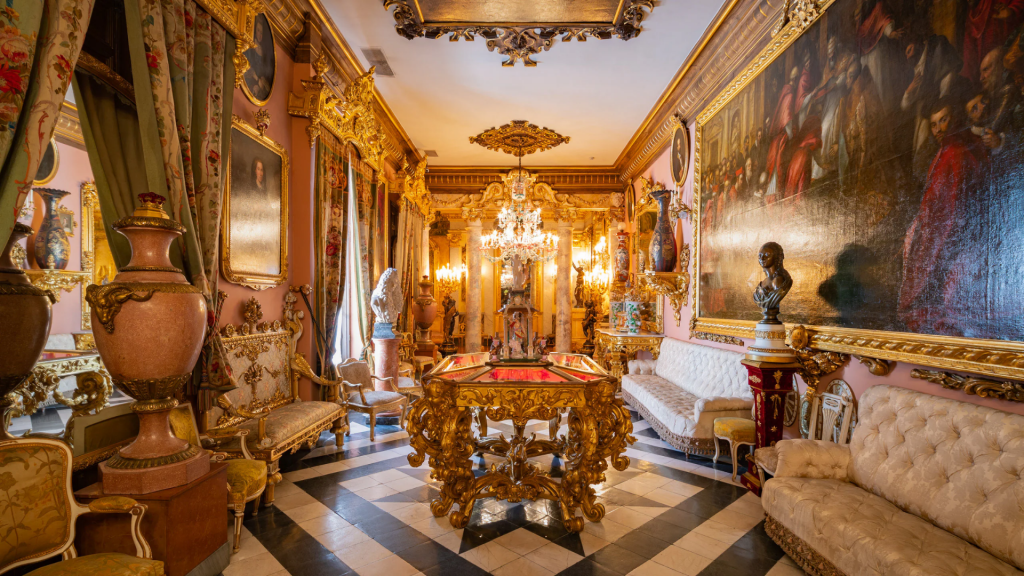
The Museo Cerralbo feels like stepping straight into the elegant world of 19th-century Madrid. Once the lavish home of Enrique de Aguilera y Gamboa, the 17th Marquis of Cerralbo, this grand mansion turned museum offers a rare peek into the lifestyle of Spanish nobility. Opened to the public in 1924, the residence is still almost exactly as it was, a beautifully preserved time capsule filled with art, antiques, and opulence.
Unlike Madrid’s big, bustling museums, the Cerralbo has an intimate charm. Every room is richly decorated and packed with the Marquis’s personal treasures, paintings, sculptures, armor, coins, and decorative arts, all displayed just as he left them. Walking through its halls feels less like visiting a museum and more like being invited into a noble family’s private home.
Must-See Features
- The Grand Staircase – A lavish entrance hall that sets the tone for the opulent interior.
- European and Oriental Armor – A diverse collection of weapons and suits of armor.
- Paintings by El Greco and Zurbarán – Highlights of the Marquis’s art collection.
- Sumptuous Ballrooms and Dining Rooms – Preserved in authentic 19th-century style.
- Decorative Arts and Porcelain – Objects reflecting the aristocratic tastes of the time.
Museo Naval
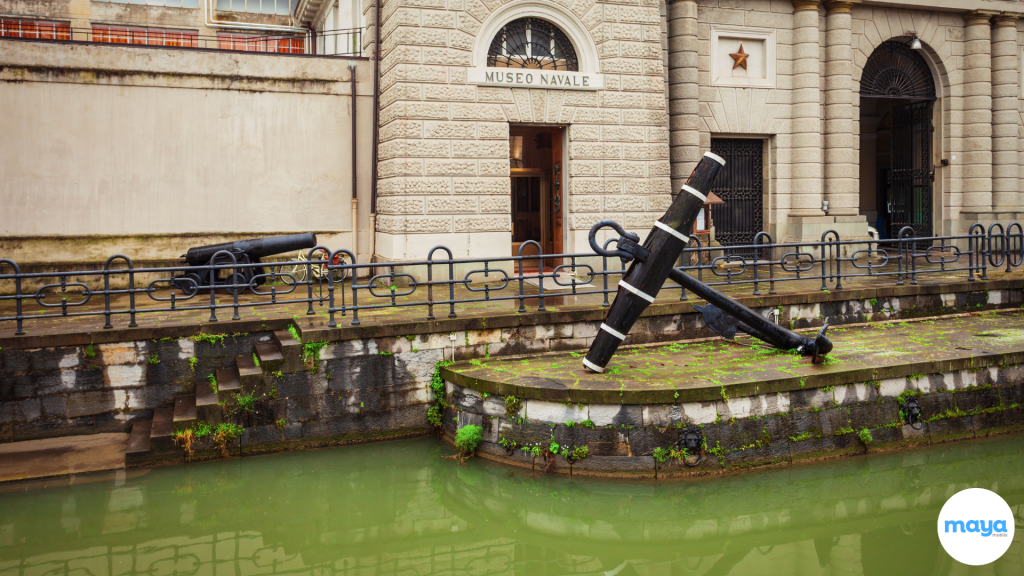
The Museo Naval (Naval Museum of Madrid) is one of those places that surprises you with just how much history it holds. Founded in 1843, this fascinating museum sits inside the Spanish Navy Headquarters along the Paseo del Prado, right in the heart of Madrid’s cultural district.
It tells the story of Spain’s long and adventurous relationship with the sea, from the daring explorers of the 15th century to the modern naval era. As you move through its galleries, you’ll find everything from ancient navigational tools and detailed ship models to weapons, uniforms, maps, and paintings. Each piece helps paint a picture of how Spain’s Navy once shaped the world during the Age of Exploration and beyond.
It’s the kind of museum that makes you feel like you’re walking through centuries of adventure, discovery, and maritime pride, all without leaving Madrid.
Must-See Exhibits
- The Mappa Mundi of Juan de la Cosa (1500) – The earliest known world map to include the Americas.
- Ship Models – Detailed reproductions of galleons, frigates, and other naval vessels.
- Portraits of Admirals and Naval Heroes – Including Blas de Lezo and Álvaro de Bazán.
- Weapons and Uniforms – Showcasing the evolution of naval warfare.
- Artifacts from the Spanish Armada – Relics that tell the story of one of history’s most famous fleets.
Madrid’s museums weave art, history, and heritage into one unforgettable experience, making the city a true cultural treasure for travelers seeking creativity, discovery, and timeless inspiration.
Historical Places
Madrid’s rich past is etched into its palaces, plazas, and monuments, offering visitors the chance to step back in time and explore the city’s fascinating history firsthand.
Royal Palace of Madrid (Palacio Real de Madrid)
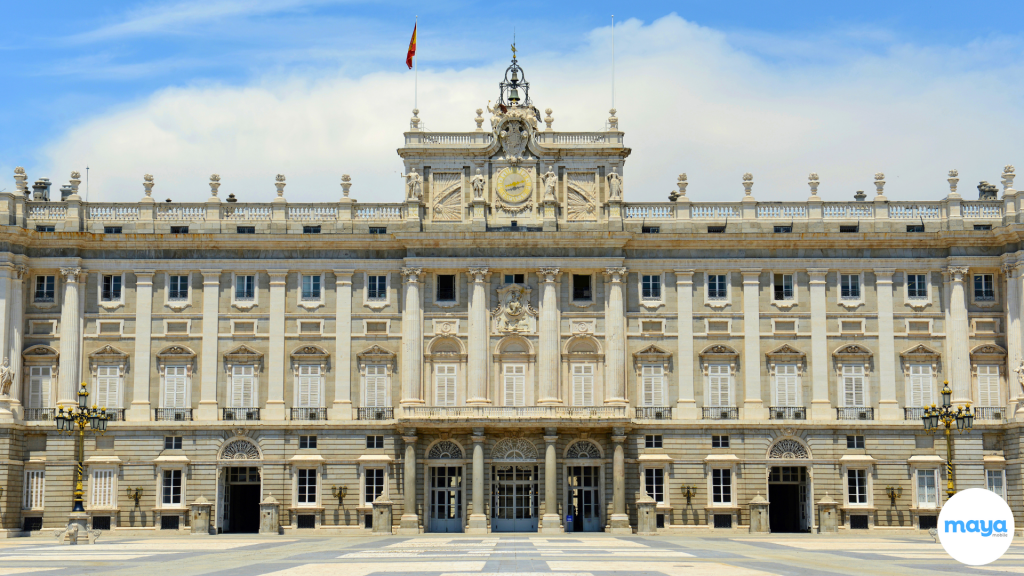
The Royal Palace of Madrid (Palacio Real de Madrid) is one of the city’s most stunning landmarks, and the largest royal palace in Western Europe. Built in the 18th century on the site of the old Alcázar fortress, which was destroyed by fire in 1734, the new palace was commissioned by King Philip V and designed in a magnificent blend of Baroque and Classical styles.
With more than 3,000 rooms, it once served as the official residence of Spain’s monarchs, though today it’s used mainly for state ceremonies and special events. Every corner of the palace reflects elegance and grandeur, from its frescoed ceilings to its glittering chandeliers and priceless works of art.
Visiting the Royal Palace isn’t just about seeing a building; it’s about stepping into Spain’s royal history and witnessing the country’s cultural heart in its most majestic form.
Must-See Features
- The Throne Room – Lavishly decorated with chandeliers, frescoes by Tiepolo, and rich furnishings.
- The Royal Armory – A collection of weapons and armor dating back to the 15th century.
- The Royal Pharmacy – Preserved cabinets and jars showcasing centuries of medicinal history.
- The Hall of Mirrors – A room of elegance influenced by Versailles.
- Art Collections – Paintings by artists such as Velázquez, Caravaggio, and Goya.
Almudena Cathedral (Catedral de Santa María la Real de la Almudena)
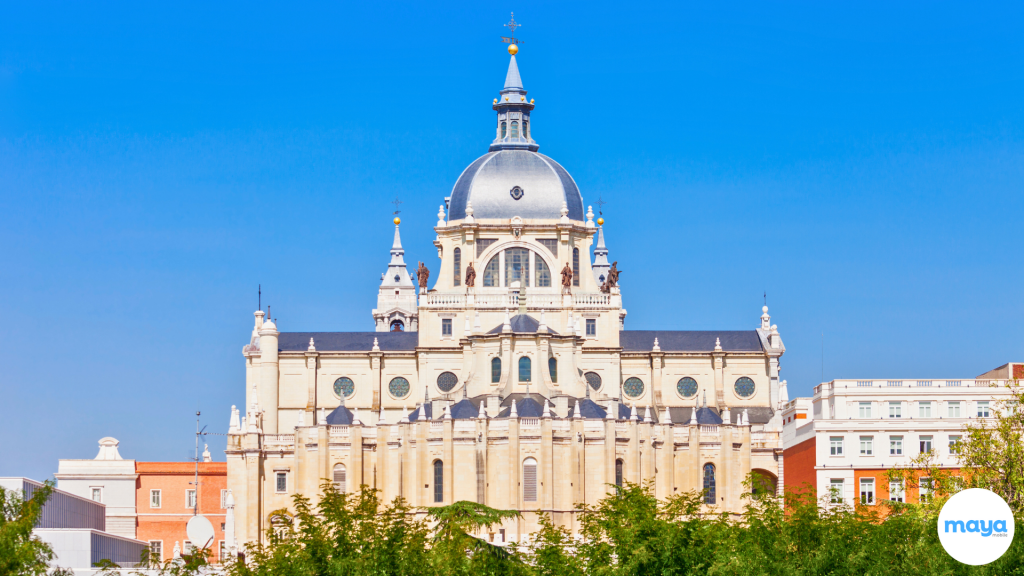
The Almudena Cathedral is Madrid’s most important Catholic church and one of its most beautiful landmarks. Dedicated to the Virgin of Almudena, the city’s patron saint, it sits right next to the Royal Palace, creating a striking symbol of both faith and royal tradition at the very heart of Madrid.
Although the idea for a cathedral dates all the way back to the 16th century, construction didn’t actually begin until 1879, and it would take more than a hundred years to complete. Finally, in 1993, Pope John Paul II consecrated the cathedral, giving Madrid a spiritual monument worthy of its capital status.
Blending Neo-Romanesque, Neo-Gothic, and Neo-Classical styles, the Almudena Cathedral is a fascinating mix of old and new, a place where history, art, and devotion come beautifully together.
Must-See Features
- The Neo-Romanesque Crypt – One of the oldest sections, featuring more than 400 columns and tombs of notable Spaniards.
- The Main Nave and Dome – A luminous Neo-Gothic space with colorful modern ceiling frescoes.
- The Chapel of the Virgin of Almudena – Honoring Madrid’s patron saint.
- The Museum of the Cathedral – Exhibiting sacred art and artifacts from Spanish Catholic history.
- The Dome’s Viewing Platform – Offering panoramic views over Madrid and the Royal Palace.
Plaza Mayor
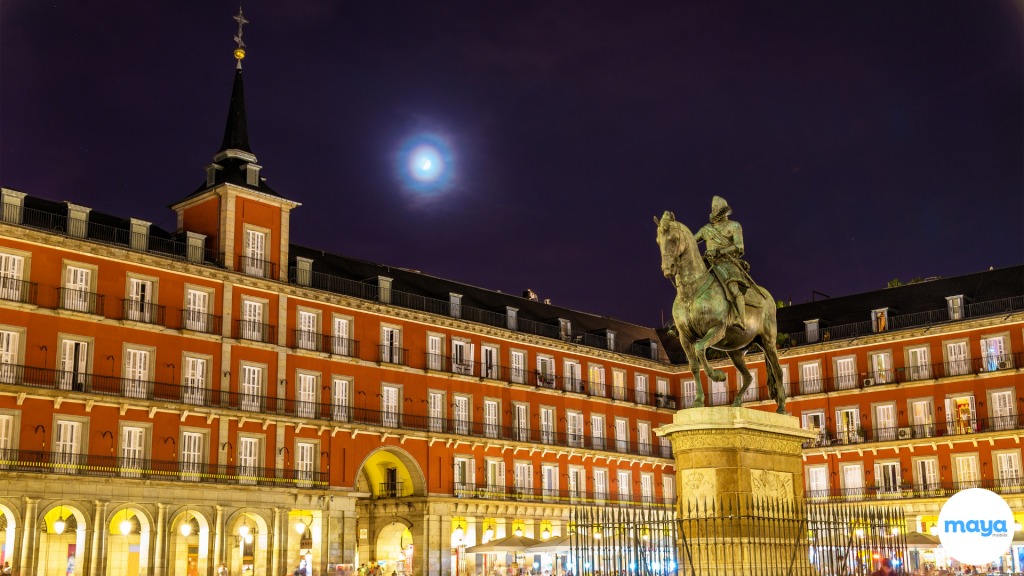
The Plaza Mayor is Madrid’s grand central square and one of its most iconic landmarks. Built in the early 17th century during the reign of Philip III, it was designed by Juan Gómez de Mora as a lively marketplace and public gathering space.
Over the centuries, it’s hosted everything from royal festivals and bullfights to local markets and cultural events. Surrounded by elegant three-story buildings with charming balconies, the square remains a favorite meeting spot filled with cafés, shops, and street performers.
At its center stands the equestrian statue of King Philip III, a proud reminder of Madrid’s history. Today, Plaza Mayor blends old-world grandeur with everyday vibrancy, making it an unmissable stop in the heart of the city.
Must-See Features
- Statue of Philip III – The iconic bronze equestrian statue at the square’s heart.
- Casa de la Panadería – The most striking building in the square, adorned with colorful frescoes.
- Arched Entrances – Picturesque gateways leading into the square, each with its own character.
- Historic Cafés and Restaurants – Including traditional spots serving specialties like bocadillo de calamares (calamari sandwich).
- Seasonal Markets and Festivals – Especially lively during Christmas and cultural events.
Puerta del Sol
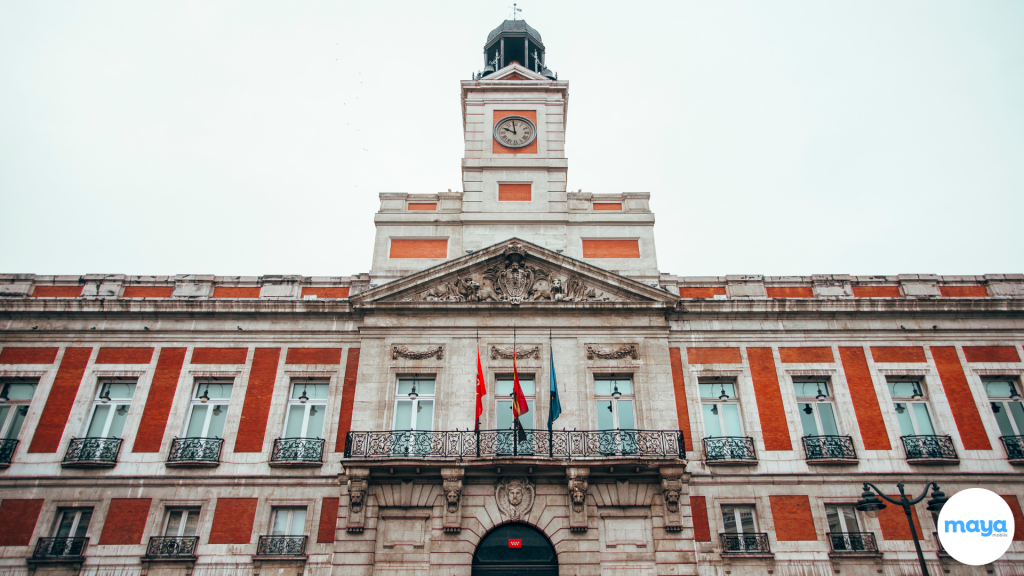
The Puerta del Sol is one of Madrid’s liveliest and most iconic squares—often called the very heart of the city. Dating back to the 15th century, it takes its name from a gate that once faced the rising sun.
Through the years, it’s been the setting for key moments in Spanish history, including the 1808 uprising against Napoleon’s troops and the proclamation of the Second Republic in 1931. Today, it’s a bustling meeting point for locals and visitors alike.
Every New Year’s Eve, crowds gather here to eat twelve grapes at midnight, a beloved Spanish tradition that marks a fresh start to the year.
Must-See Features
- Kilometer Zero (Kilómetro Cero) – The symbolic starting point of Spain’s national road network.
- The Statue of the Bear and the Strawberry Tree (El Oso y el Madroño) – Madrid’s official emblem and a favorite photo spot.
- Casa de Correos – An 18th-century post office building whose clock marks Spain’s New Year tradition.
- Equestrian Statue of Charles III – Honoring the monarch remembered as “the best mayor of Madrid.”
- Bustling Streets Leading Off the Square – Including Calle Preciados and Calle Mayor, two of Madrid’s busiest shopping areas.
Retiro Park (Parque del Buen Retiro)
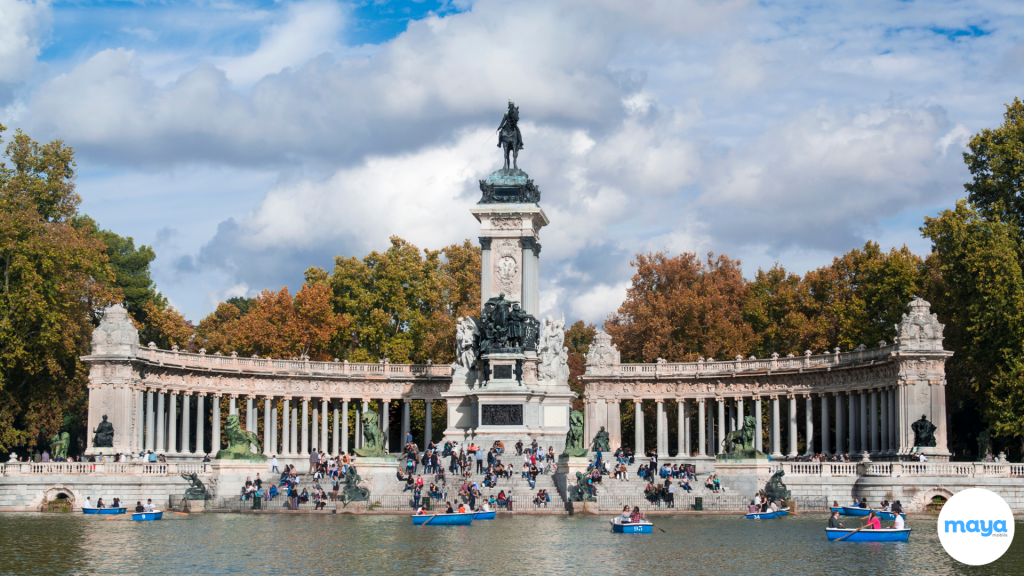
The Parque del Buen Retiro, or simply Retiro Park, is Madrid’s green heart and one of Europe’s most beautiful historic parks. Created in the 17th century for King Philip IV as part of a royal retreat, it was once reserved for the Spanish monarchy before opening to the public in the 19th century.
Over the centuries, Retiro has been a setting for royal festivities, military parades, and cultural gatherings, mirroring Madrid’s rich history. Spanning more than 125 hectares, it’s filled with gardens, monuments, sculptures, and lakes, offering a peaceful escape from city life. Whether you’re boating, strolling, or just relaxing under the trees, Retiro Park is a timeless oasis in the heart of Madrid.
Must-See Spots
- The Crystal Palace (Palacio de Cristal) – A 19th-century glass pavilion inspired by London’s Crystal Palace, often used for art exhibitions.
- The Retiro Lake (Estanque Grande del Retiro) – A boating lake once used for mock naval battles.
- The Monument to Alfonso XII – An impressive colonnade and statue overlooking the lake.
- The Rose Garden (La Rosaleda) – A colorful garden blooming with thousands of roses.
- The Fallen Angel Statue (El Ángel Caído) – One of the few public monuments in the world dedicated to Lucifer.
Temple of Debod (Templo de Debod)
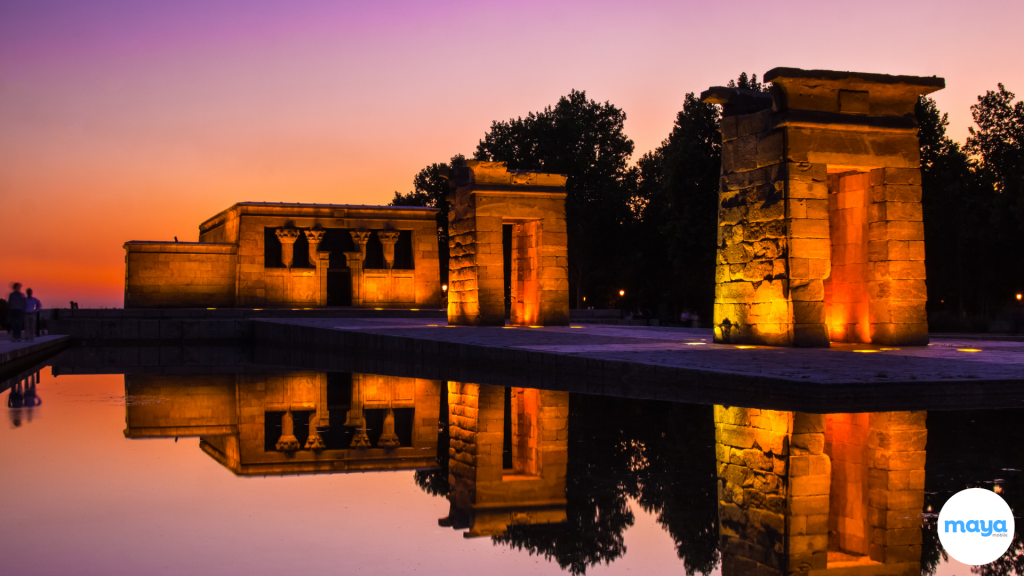
The Temple of Debod is one of Madrid’s most fascinating and unexpected landmarks, an authentic ancient Egyptian temple right in the heart of the city. Dating back to the 2nd century BC, it was originally built near Aswan and dedicated to the gods Amun and Isis.
In 1968, Egypt gifted the temple to Spain as a thank-you for helping save the Abu Simbel temples during the construction of the Aswan High Dam. Each stone was carefully dismantled, shipped, and reassembled in Parque del Oeste, where it opened to the public in 1972.
Today, it’s one of Madrid’s most unique sights, a serene spot where you can admire history, sunsets, and skyline views all at once.
Must-See Features
- The Original Temple Structure – Including its gateways and sanctuaries, reconstructed exactly as in Egypt.
- Hieroglyphic Inscriptions – Preserved on the temple’s inner walls, showcasing ancient Egyptian religious imagery.
- The Main Hall and Chapel of Adijalamani – Dedicated to the gods Amun and Isis.
- Sunset Views – The temple is especially breathtaking at dusk, reflecting against its surrounding pool.
- Panoramic Vistas – Offering views over Casa de Campo and the Royal Palace area.
Puerta de Alcalá
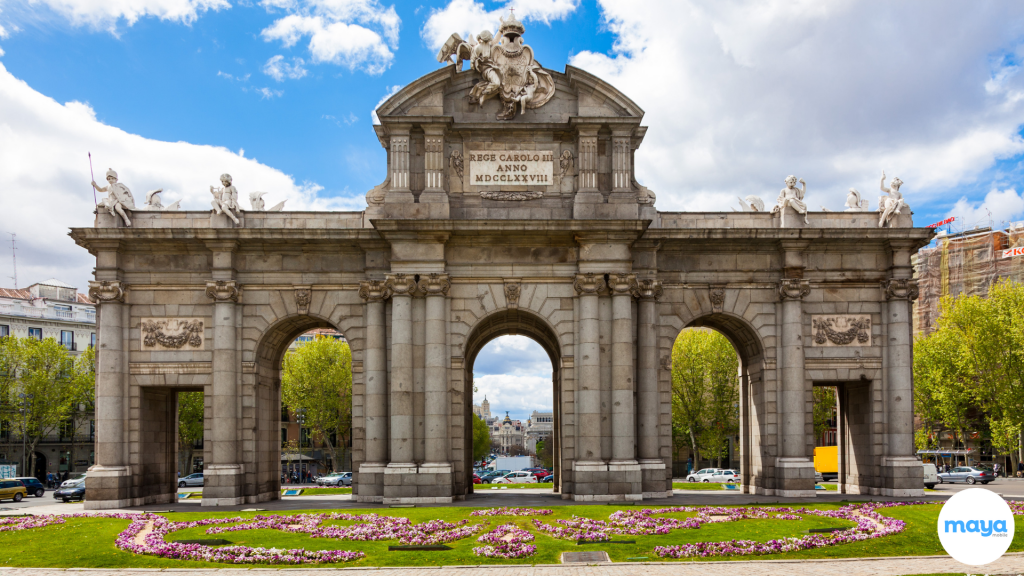
The Puerta de Alcalá is one of Madrid’s most recognizable monuments and a lasting symbol of the city’s neoclassical charm. Commissioned by King Charles III and designed by Italian architect Francesco Sabatini, it was completed in 1778 as a grand gateway welcoming travelers into Madrid.
Standing proudly in the Plaza de la Independencia, right beside Retiro Park, the monument was once part of the city’s old defensive wall. Inspired by Roman triumphal arches, it marked Madrid’s rise as a modern European capital.
Over the years, the Puerta de Alcalá has become much more than a monument; it’s a beloved city icon and the backdrop for celebrations, parades, and cultural events that bring Madrid’s spirit to life.
Must-See Details
- The Five Arches – A blend of semicircular and rectangular arches with elegant symmetry.
- Ornamental Sculptures – Designed by Francisco Gutiérrez and Roberto Michel, featuring lions, trophies, and allegorical figures.
- Latin Inscriptions – Commemorating King Charles III’s vision for Madrid’s modernization.
- Night Illumination – The monument is beautifully lit after dark, making it a striking photo spot.
- Surrounding Plaza de la Independencia – A lively square that links Retiro Park with the city center.
Atocha Station (Estación de Atocha)
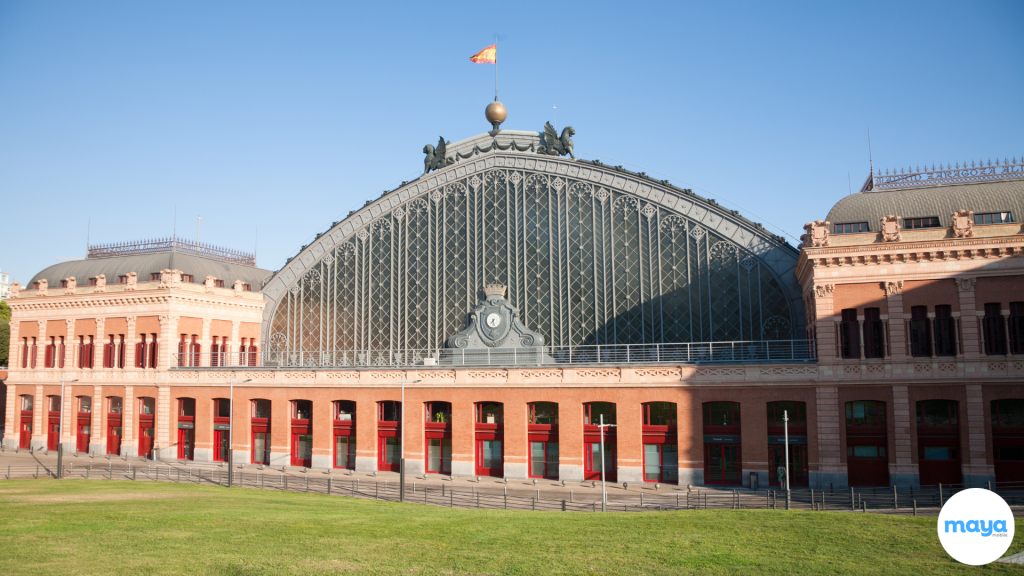
The Estación de Atocha is Madrid’s largest and most historic train station, a beautiful blend of 19th-century architecture and modern design. Opened in 1851, it was Spain’s first major railway hub, marking the country’s leap into the age of rail travel.
After a devastating fire, the station was rebuilt in 1892 by Alberto de Palacio, a student of Gustave Eiffel, who designed its stunning iron-and-glass roof. Decades later, in the 1990s, architect Rafael Moneo expanded and modernized the complex to welcome Spain’s new high-speed AVE trains while preserving its original charm.
Today, Atocha is much more than a station; it’s a symbol of Madrid’s connection to the rest of Spain and Europe, where history and innovation meet under one elegant roof.
Must-See Features
- The Tropical Garden – A lush indoor garden with over 7,000 plants and a small turtle pond, located in the old terminal.
- The Historic Iron-and-Glass Roof – A hallmark of 19th-century industrial design.
- Memorial to the 2004 Madrid Train Bombings – A solemn cylindrical glass monument dedicated to the victims.
- Contemporary Art Installations – Rotating exhibits in the station’s public areas.
- Connection to the Reina Sofía Museum – The station sits within walking distance of Madrid’s cultural “Art Triangle.”
Basílica de San Francisco el Grande
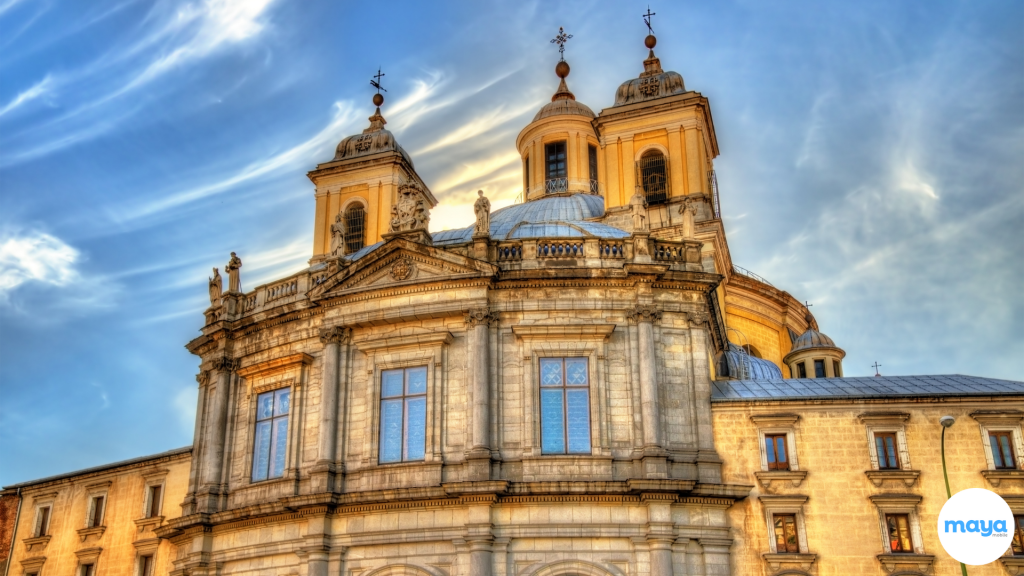
The Basílica de San Francisco el Grande, located in Madrid’s La Latina district, is one of the city’s most breathtaking religious landmarks. Built in the 18th century on the site of a former Franciscan convent, believed to have been founded by St. Francis of Assisi in the 13th century, the basilica was designed by Francisco Cabezas and later completed by Francisco Sabatini.
Consecrated in 1784, it’s best known for its monumental dome, one of the largest in the world, spanning more than 33 meters in diameter. Inside, visitors can admire a remarkable collection of religious art, including works by Goya and Zurbarán. Elegant, serene, and full of history, the basilica remains both a sacred place of worship and a true cultural gem of Madrid.
Must-See Features
- The Great Dome – An architectural marvel and one of the largest domes in Europe.
- Main Altarpiece – A richly decorated focal point highlighting the basilica’s grandeur.
- Paintings by Goya and Zurbarán – Masterpieces from two of Spain’s greatest painters.
- Side Chapels – Each featuring distinct artworks, sculptures, and ornate details.
- The Cloister and Museum – Exhibiting sacred art, relics, and historical artifacts linked to the Franciscan order.
Spanish Civil War Monuments (Monumentos de la Guerra Civil Española)
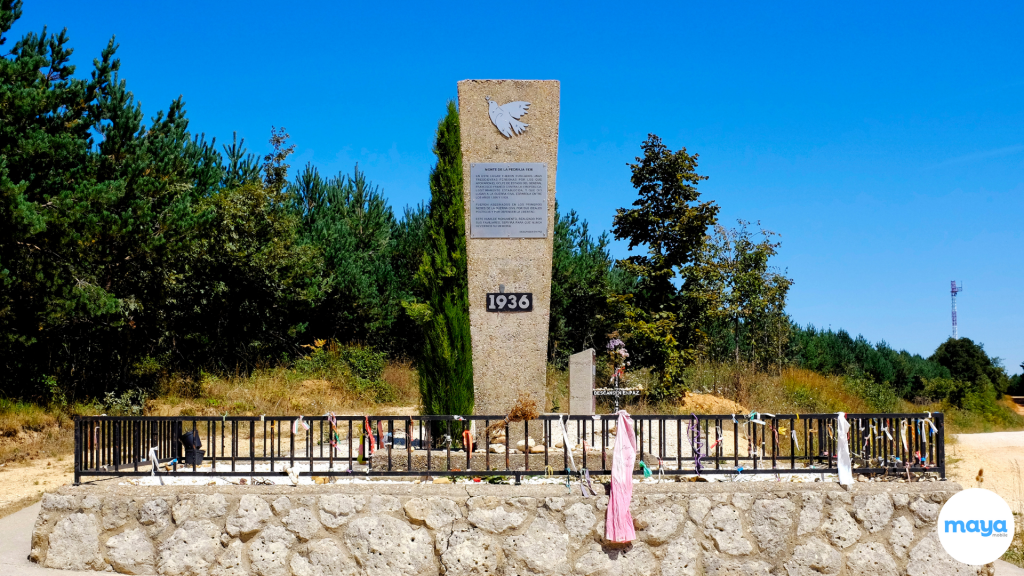
Madrid played a central role in the Spanish Civil War (1936–1939), facing intense battles, air raids, and a devastating siege that shaped the city’s history. Today, traces of that turbulent time can still be found across the capital, in monuments, memorials, and preserved sites that honor both the tragedy and the courage of those who lived through it.
These places aren’t just about remembering the past; they’re about understanding it. Spread throughout Madrid, this network of memorials offers a space for reflection and remembrance, reminding visitors of the city’s resilience and the lasting importance of historical memory in shaping a more peaceful future.
Things to Look For
- Monument to the International Brigades (Universidad Complutense Campus) – Honoring foreign volunteers who fought against fascism.
- Parque del Oeste Trenches and Bunkers – Preserved remains of the front lines during the Siege of Madrid.
- Cementerio de la Almudena Memorials – Graves and monuments dedicated to victims of the war and later repression.
- Valle de los Caídos (Valley of the Fallen, near Madrid) – A controversial site built under Franco, housing a massive basilica and cross.
- Plaques and Street Markers – Discreet memorials across neighborhoods marking bombings, battles, and civilian suffering.
Casa Gallardo
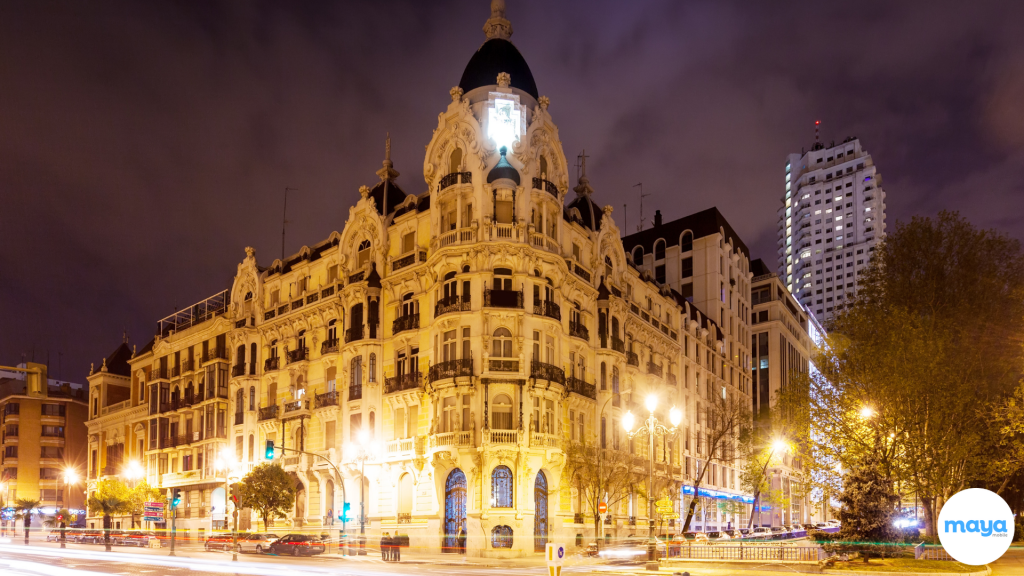
The Casa Gallardo is one of Madrid’s finest examples of Modernist (Art Nouveau) architecture, located near Plaza de España. Built between 1909 and 1911 by architect Federico Arias Rey, the building stands out for its ornate façade and distinctive design that contrasts with the more classical styles found throughout the city.
Originally commissioned as a luxury residential building, Casa Gallardo soon became a symbol of Madrid’s early 20th-century architectural innovation. Declared a Bien de Interés Cultural (Cultural Heritage Site) in 1997, it remains one of the most photographed modernist landmarks in the Spanish capital.
Things to Look For
- Curved Façade and Decorative Balconies – Hallmarks of Madrid’s Art Nouveau movement.
- Ornamental Towers and Roofline – Adding drama and elegance to the skyline.
- Delicate Ironwork – Seen in railings and decorative details.
- Contrast with Surroundings – A striking example of modernism amid more traditional architecture.
- Cultural Status – Protected as a cultural monument since the late 20th century.
El Sobrino de Botín
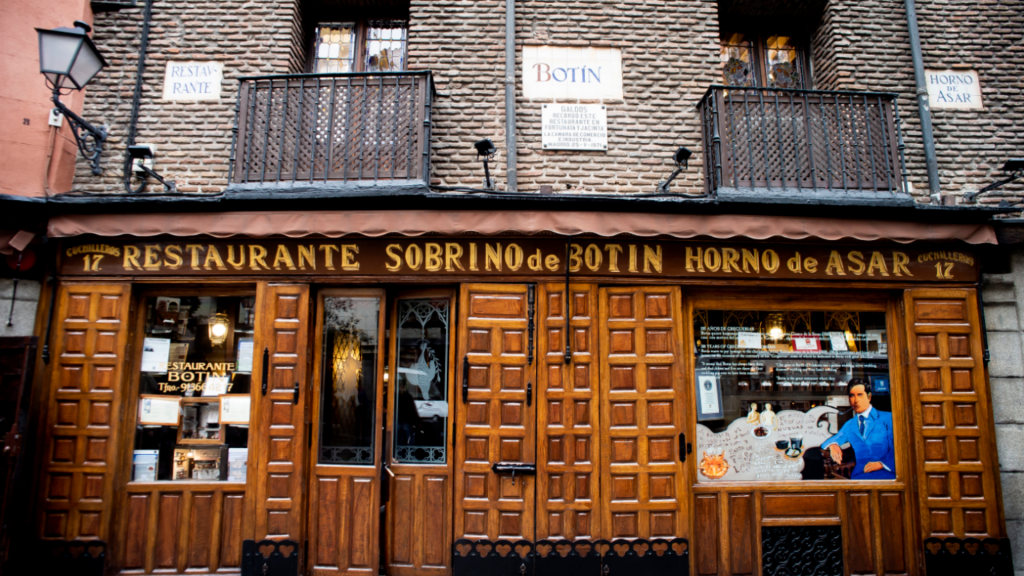
The Sobrino de Botín, founded in 1725, holds the Guinness World Record as the oldest continuously operating restaurant in the world. Located near Plaza Mayor, this historic eatery has been serving traditional Castilian cuisine for almost three centuries.
The restaurant was originally established by a French cook, Jean Botin, and later inherited by his nephew, hence the name “Sobrino de Botín” (“Botín’s Nephew”). Over the years, it has welcomed countless notable guests, including literary figures such as Ernest Hemingway and Spanish novelist Benito Pérez Galdós.
Its charm lies not only in its food but also in its preserved wood-fired oven, which has been in continuous use since the 18th century.
Things to Look For
- Cochinillo Asado (Roast Suckling Pig) – The restaurant’s signature dish, cooked in the historic oven.
- Wood-Fired Oven – In continuous use since 1725, a living piece of culinary history.
- Traditional Interiors – With tiled walls, wooden beams, and an old-world ambiance.
- Historical Guest List – Writers, politicians, and artists who dined here, including Hemingway.
- Connection to Madrid’s Old Town – Its location near Plaza Mayor makes it a perfect cultural and culinary stop.
Staying Connected on Your Madrid Journey
Madrid is a city where history and culture are alive in every corner, from its majestic monuments to its vibrant streets. Visitors can immerse themselves in centuries of tradition while enjoying the energy of a modern capital. Every trip brings new opportunities to explore and connect with its rich heritage. To make the journey seamless, travelers can use MayaMobile, which provides reliable eSIM service across the world for travelers, ensuring they stay connected and discover Madrid without limits.
Related Reads
FAQs on Madrid Journey
1. What should I not miss in Madrid?
You shouldn’t miss Madrid’s top attractions like the Prado Museum, the Royal Palace, and Retiro Park. Other must-sees include the historic Plaza Mayor and Puerta del Sol, the modern art at the Reina Sofía Museum, and sunset views from the Temple of Debod. For a taste of local life, visit the Mercado de San Miguel for tapas and stroll along the Gran Vía.
2. Is Madrid a walkable city?
Yes, Madrid is a very walkable city, especially its compact central area, making it easy to explore major landmarks on foot. The city has been recognized as Spain’s most walkable due to pedestrian-friendly streets and plazas, but it also has excellent public transport for longer distances.
3. What is Madrid’s signature dish?
If a spoon is an essential item for enjoying Madrid’s traditional food, cocido is without a doubt its most universal dish. But, where can you eat the best cocido madrileño? There are unquestionably as many variations and secret recipes as people who cook the dish.
4. What’s the best time of year to visit Madrid?
Spring is the very best time to visit Madrid. Its onset is heralded by the blooming of pink almond blossoms from February to early March, and visitors who don’t mind the nip in the air can enjoy these in Parque del Buen Retiro’s almond orchard or the garden at Quinto de los Molinos.