

Nothing ruins a post-vacation high faster than opening your bank app and realizing your “budget trip” somehow bled your wallet dry. We have all been there: you scored a surprisingly cheap flight, only to be shocked by unexpected baggage fees, sneak-attack resort charges, and overpriced airport coffees that cost more than your seat upgrades. Budget travel sounds amazing until the hidden costs start quietly multiplying behind your back.
The good news? You don’t have to survive on instant noodles or sleep in sketchy alleys to keep your trip affordable. With a few smart moves, you can outsmart the travel industry’s sneaky traps. Here is how to travel on a budget without letting the budget costs crash your dream getaway.
Table of contents
The True Trip Cost Checklist
Before hitting “book” on any flight or hotel, run your travel plan through this total-cost checklist to ensure no surprise charges pop up later:
- Transport: base airfare/train ticket, carry-on or checked baggage, seat selection fees, airport transit/taxis, and potential ticket change fees.
- Accommodation: Nightly room rate, mandatory resort or destination fees, local tourist taxes, cleaning fees, parking, and daily transit to main sites.
- Daily Spending: meals, street food, groceries, coffee, tips, entrance tickets, and guided activities.
- Travel Essentials: Travel insurance coverage, entry/visa permits, vaccinations, health documents, etc.
- Connectivity and Payments: eSIM or local SIM plans, foreign currency conversion fees, ATM withdrawal fees, and credit card markup fees.
3 Things That Decide Your Whole Budget For A Trip
When you strip away all the fancy extras, your travel budget really comes down to three non-negotiables. How you get there, where you sleep, and what you eat. If you get these 3 expenses right, everything else falls into place. Fail to plan them, and your budget will crumble before you even unpack your bags.
Flights

Forget the old “book on a Tuesday” rule; it’s outdated advice. Pricing is now handled by algorithms that adjust fares many times a day, so the exact day you hit “buy” barely moves the number. What still matters is the booking window.
“Hold on, don’t hit book just yet; let’s double-check the fares first.” If you have ever said this to a friend or spent hours staring at open tabs trying to figure out why a flight price jumped by $50 in 10 minutes. Then you are definitely not alone. Finding cheap flights often feels like trying to crack a code. Let’s break down how flight pricing “actually” works and debunk a few travel myths.
1. Incognito Mode: What’s Myth & What’s Reality?
“Clear your cookies! The airline knows you are looking at that flight!”
We have all heard this advice at least once. But here’s what’s really going on behind the scenes. Airlines don’t typically raise prices just because you refreshed a page. Instead, they use complex revenue management systems that divide seats into price buckets ( called “fare buckets). When the cheapest bucket sells out, the system automatically displays the next higher-priced bucket.
Pro Tip: Instead of constantly switching to Incognito mode, use tools like Google Flights or Hopper to check the price history graph. This tells you if the current rate is actually high, typical, or a rare bargain.
2. The “Goldilocks Window” For Booking
Booking too early can mean missing out on promotional discounts, while booking too late leaves you at the mercy of last-minute business fares.
- Domestic flights (3 to 6 weeks out): The sweet spot for domestic travel is usually 21 to 45 days before departure. This is when the airline begins adjusting prices based on unsold seats.
- International Trip ( 2 to 5 months out): Long-haul routes require a wider window. Start tracking fares about 3 to 5 months in advance, especially if you are traveling during peak seasons like holidays or summer breaks.
3. Fly Midweek, Not Just Book On Tuesday
There is a widespread rumor that booking a flight at 3 AM on a Tuesday guarantees the lowest price. In reality, the day of the week you book matters far less than the day you fly. So, flights departing on Tuesdays and Wednesdays are generally 10% to 15% cheaper than flights departing on Fridays or Sundays. Because business travelers and weekend holidaymakers drive up demand on the weekend.
4. Alternate Airports and Hidden Route Savings
When flying into major global cities like London, New York, or Tokyo, don’t limit your search to just one main airport. So, try to book a flight to a secondary airport, for example, London Gatwick instead of Heathrow or Tokyo Narita instead of Haneda. This can save you a significant amount, even after accounting for a quick train or bus ride into the city center.
Set up automated fare alerts for your target route at least a month before your planned purchase date. That way, if a flash sale drops, you can grab it right away.
Stay

Accommodation is almost always your second biggest travel expense, and it’s hands down where the gap between the headline price and your actual credit card charge gets the widest. If you have ever felt that sting of unexpected add-ons right as you hit checkout, you are not alone. Let’s see what hidden fees to look out for and how smart choices can quietly save you hundreds on your trip.
1. Mandatory Resort and Destination Fees: A Hidden Trap
It’s one of the most frustrating moments in travel where you pick a room at a great nightly rate only to discover a mandatory “destination fee,” “facility charge,” or “resort fee” on the final bill. The average US resort fee hovers around $42 per night, covering basic amenities like Wi-Fi or access to the fitness center. Thanks to the recent consumer protection rules, booking platforms and hotels must now disclose all these extra fees only during the search process.
Pro Tip: When you search on booking sites, you have to immediately switch your sorting filter from “nightly rate” to “total price.” So now, a $120 room with a $40 resort fee won’t trick you into thinking it’s cheaper; it’ll show you a $150 room.
2. Savings on Food
Sometimes paying $20 more per night for the right room can actually save you $60 a day on food. How? So, a decent complimentary hot breakfast for a family of 3 to 4 easily saves $40 to $60 every single morning.
3. Location vs. Transit: Calculate the Cost
That budget hotel you look for your next vacation is 45 minutes outside the city center might look like a perfect deal on paper, but location maths is the game. Before booking, also calculate transit costs, such as daily rideshare fares, parking fees, or public transportation fares. Spending 2 hours a day commuting back and forth to your hotel room takes away precious time on vacation. Often, paying slightly more to stay centrally located saves both money and energy on your trip.
Food

Food is the ultimate sneaky expense because it shows up 3 to 4 times a day, every single day of your trip. The secret to keeping your wallet happy is not starving yourself or skipping local delicacies; it’s using the 1:2 rule. Pick one meal a day, usually dinner, to sit down, treat yourself, and try the local specialty at a nice restaurant. Then, for the next meal, you can hit up a local street food stall for lunch or stock your hotel fridge with fruits and drinks. Or book a hotel room with a complimentary breakfast. This simple balance keeps your daily average low without making your trip feel like a compromise.
The Budget Traps: 3 Sneaky Travel Costs Hiding in Plain Sight
We have all been there when a “budget” trip just annihilates your bank account. You set a neat little travel budget, book a reasonable flight, and congratulate yourself on being a financial wizard. Then your flight lands at the destination, and suddenly, money is leaking out of your wallet like a broken faucet. If your “cheap” vacation ended up costing as much as a small luxury cruise, then these four stealthy traps are to blame, and here’s what you can do to outsmart them:
1. The “Landmark View: Lunch Trap

“$18 for a basic Margherita Pizza? But hey, look at the Colosseum!” We get it, you have been walking all morning, your feet hurt, and you are hangry. That cute cafe right opposite the iconic tourist monument looks incredibly inviting.
- The reality: Restaurants within a 5-minute splash zone of major attractions charge extra for the location. You are paying a 35% markup just to stare at a famous piece of stone while eating mediocre pasta.
- The fix: Take a breath, turn around, and walk just 2 to 3 blocks away from the main tourist strip. The crowds thin out, and the food actually tastes authentic, and the menu prices instantly drop by a third.
2. The Airport Currency Exchange
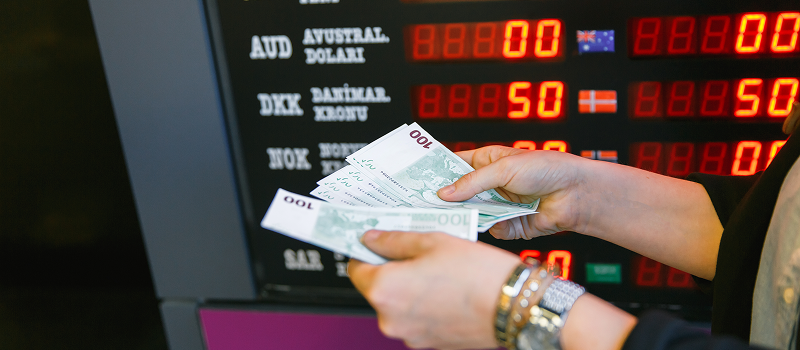
Standing at the airport arrivals hall with zero local cash feels vulnerable, which is exactly what those bright, shiny currency exchange kiosks feed on.
- The Reality: Don’t let the “Zero Commission” signs fool you. Studies show that airport kiosks hide massive markups in their exchange rates, typically 5% to 15% above the market rate.
- The Fix: We suggest you skip the Kiosk entirely. Use a multi-currency card like Wise or Revolut, or a zero-foreign-transaction-fee debit card, at a standard airport ATM to withdraw local cash. You will get within 1% of the real exchange rate. Keep airport kiosks strictly for middle-of-the-night emergencies.
3. Pay In your Home Country Trap
It feels safe and familiar when a card machine in Europe or Southeast Asia asks, “Would you like to pay in USD or local currency?” It feels like a friendly courtesy, right? Wrong! It’s a giant trap called Dynamic Currency Conversion (DCC).
- The Reality: When you select your home country, the foreign bank gets to set its own absurd exchange rate. Many tests around 11 countries revealed that choosing your home currency slaps an extra 2.6% to 18% hidden fee onto your bill.
- The fix: Always choose the local currency, like Euros in France, Baht in Thailand, Yen in Japan, etc. Let your own back handle the conversion, as it will almost always be miles cheaper.
Get Your Data Sorted Before Your Flight Touches Down
Nothing kills post-flight Euphoria quite like standing in a 45-minute airport line just to buy a connection. Airport SIM kiosks run on sheer convenience pricing by slapping a massive 40% or higher markup on basic data packages because they know you are tired, disconnected, and desperate to open Google Maps.
However, setting up a Maya Mobile eSIM before you leave completely flips the script. You simply pick your destination, install your data plan on your home Wi-Fi in under 2 minutes, and toggle it on the second your plane lands. Maya Mobile offers flexible daily data options with zero hidden roaming fees, high-speed coverage without surprise carrier bills. It’s the ultimate way to stay connected on your terms, proving that learning how to travel on a budget without hidden costs, eating it up, starts the second you land.
Also Read: How to Plan a US Open Tennis 2026 Trip: Tickets, Dates, Visa Rules and Staying Connected