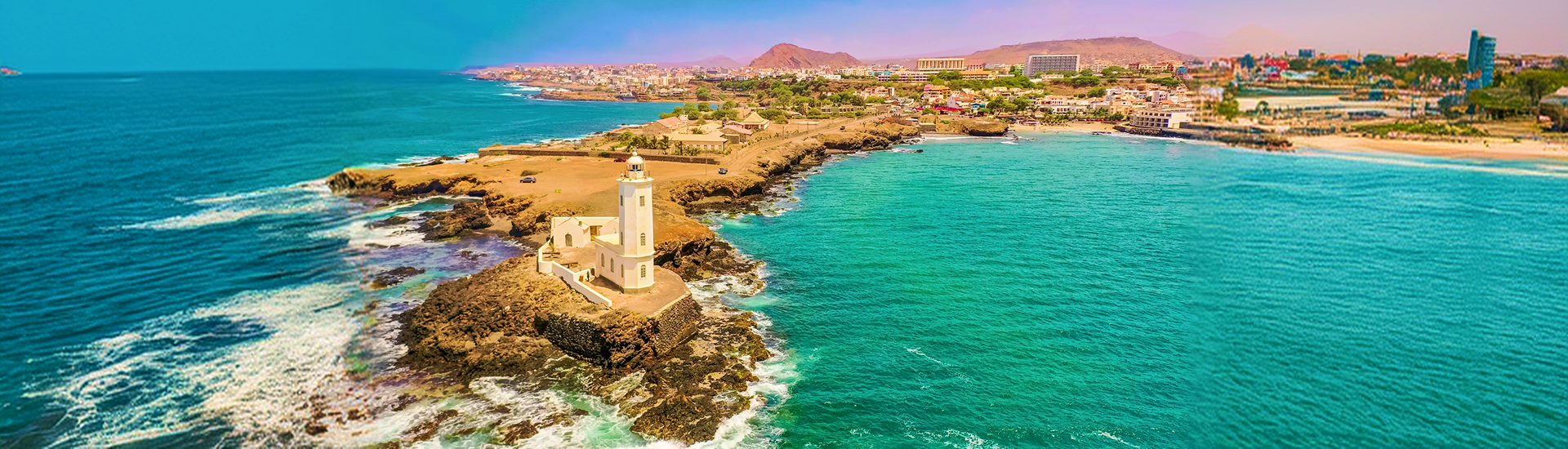
Until this summer, most people could not have found Cabo Verde or Cape Verde on a map. Then a national team from a country of barely 500,000 people walked into its first-ever FIFA World Cup, held in Spain and Uruguay, and became the smallest nation ever to reach the knockout rounds. And guess what? Cabo Verde’s national football team even pushed Messi’s Argentina to extra time before bowing out in Miami. Overnight, the whole world started asking the same question: where is Cabo Verde and what is it like to visit?
The short answer is that Cabo Verde is one of the Atlantic’s most rewarding island destinations. It is a cluster of 10 volcanic islands with year-round sunshine, dramatic hiking, and a deep-rooted music culture. A perfect destination for your summer vacation away from all the usual tourist attractions. Read our guide to learn more about what you can see, things to do, and when to visit.
Where is Cabo Verde Located?
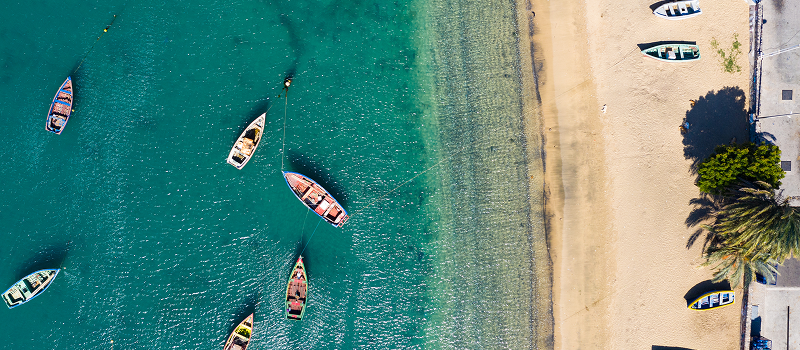
Cabo Verde, also known as Cape Verde, is a country of 10 volcanic islands sitting roughly 350 miles off the west coast of Senegal. It was a Portuguese colony until it gained independence in 1975. This is why you will hear Portuguese, see restaurants and cafes serving Portuguese-influenced food, and pay in escudos. Thanks to its geographical location in the middle of the Atlantic, it’s a perfect place to spot whales, dolphins, and sea turtles.
The Islands And Which One Is For You?
No two Cabo Verde islands feel the same, so it helps to choose based on the trip you want.
Sal: Golden Beaches and Turquoise Surf
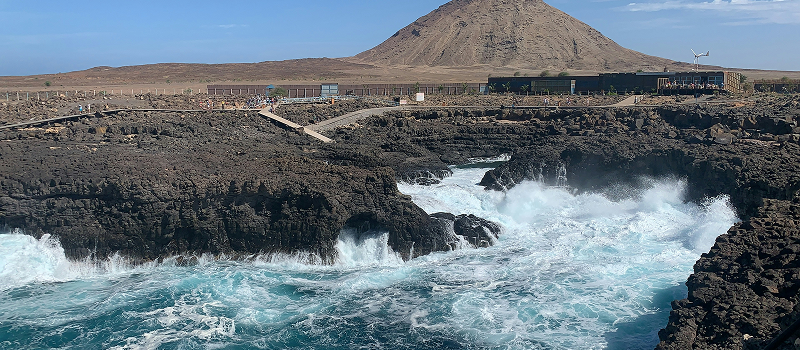
Sal is the easiest place to start and the island most first-timers land on. It is sandy, built for a perfect summer beach holiday. You can base yourself in Santa Maria for its 8km beach, then take a day tour to see the rest. The shallow Shark Bay, where harmless juvenile lemon sharks circle your ankles, and the salt pools at Pedra de Lume, inside an extinct volcano crater, where you float as in the Dead Sea. Moreover, there is Buracona’s Blue Eye, a lava pool that glows turquoise when the sun hits it right.
Boa Vista: Quiet Beaches And Turtles
Boa Vista is Sal’s quiet neighborhood with long empty beaches, desert dunes, and sea-turtle nesting season in summer.
Santo Antao: The Hiker’s Paradise
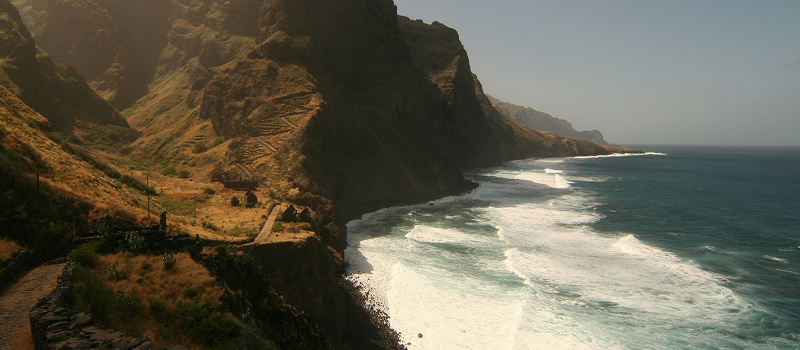
Santo Antao is the island for hikers. Its terraced valleys and misty ridgelines draw hikers and trekkers from all over the world. There is no airport here, so you have to arrive here by ferry from São Vicente. Some of the best hiking routes you can do are Cova to Cidade das Pombas and Ponta dol Sol to Cha de Igreja. You can see Delgadim Ridge, one of the most beautiful viewpoints in Santo Antão.
São Vicente: Known For Its Music
São Vicente is the cultural heart of the country. Its main city, Mindelo, is the music capital and the hometown of the late Cesária Évora, the singer who carried the mournful morna sound to the world. Spend your evenings in the live-music bars, wander the market by day, and climb Monte Verde for the view.
Fogo: A Volcano You Can Climb
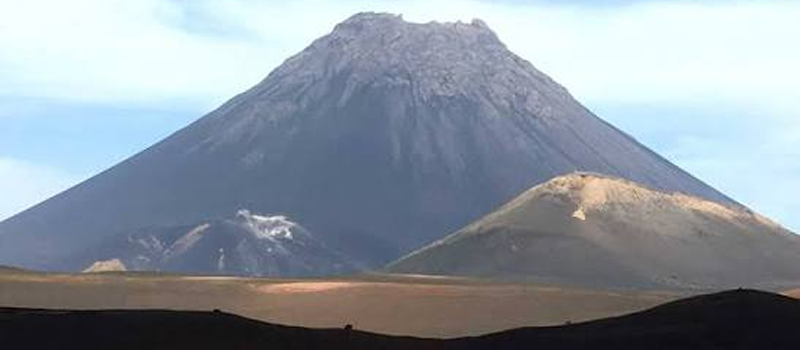
Fogo is essentially one large volcano rising out of the sea. You can hike Pico do Fogo, the country’s highest peak. After this, you can also taste wine grown in the crater itself.
Santiago: The Capital
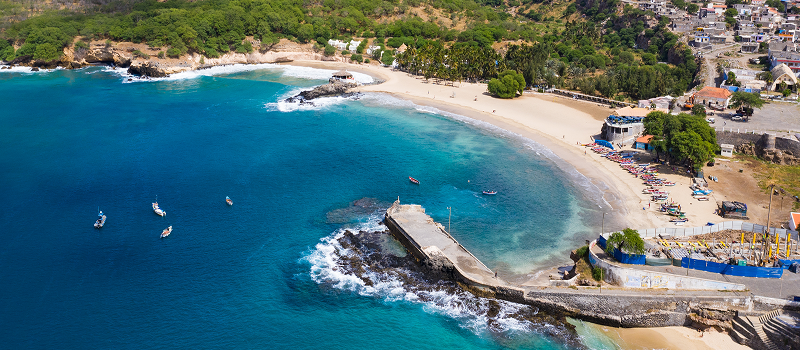
Santiago holds the capital, Praia, plus Cidade Velha, the first town Europeans built in the tropics. These are also Cabo Verde’s first UNESCO World Heritage Site. And you can share all the snippets directly while staying connected by installing the Maya eSIM app and switching the travel mode on. Within 5 minutes, you will have access to unlimited data with no caps or throttling, 4G LTE and 5G where available, Wi-Fi hotspot and tethering.
What To Eat And Do At Cabo Verde
Wherever you land, order cachupa, the national dish, a slow-cooked stew of corn, beans and whatever fish or meat is on hand. Locals swear it tastes even better reheated the next morning as cachupa refogada. Seafood is the star everywhere, so make time for grilled tuna or lobster straight from the Atlantic.
Even though there are options for vegetarians in the bigger towns, you might find it difficult on far-away islands, though beans and fresh produce are everywhere. Your evening will fill up with morna and coladeira, the two styles that define Cabo Verdean nights, and few places let you surf in the morning and climb a volcano the next day.
Cabo Verde Travel basics: Currency, Language and Practical Tips
So, if you are planning to spend your summers in Cabo Verde or Cape Verde, you should know that the escudo is a closed currency, so you cannot get it before you arrive or take any currency back home. We suggest you carry some cash for smaller islands and villages where ATMs are scarce. But don’t worry, as Euros are accepted almost everywhere at a roughly fixed rate.
Portuguese and Creole are the everyday languages, with English common in tourist areas on Sal and Boa Vista and less so elsewhere. A little French helps on some islands. Cabo Verde is also a genuinely safe place to travel, including for solo travelers, with a feel closer to Europe than mainland West Africa.
Staying connected needs the same forward planning as your cash. US carrier roaming in Cabo Verde tends to be slow or expensive, and airport Wi-Fi wont carry you through EASE checks, ferry apps or maps in the hills of Santo Antao. A travel eSIM is the fix for this, and with Maya eSIM, you can buy the plan by scanning the QR code in your email, and you’re connected before takeoff. Since Maya global eSIM covers 165+ countries on one profile, the same setup that works in Praia carries over to your next trip too. And once you start island-hopping, it keeps you online between Sal, São Vicente, and Fogo without a new local SIM on each one.
Travel Tip: Plugs here are European Type C and F on 220V, so bring a US adapter and check the voltage on anything that is not dual-voltage.
Best Time To Visit Cabo Verde
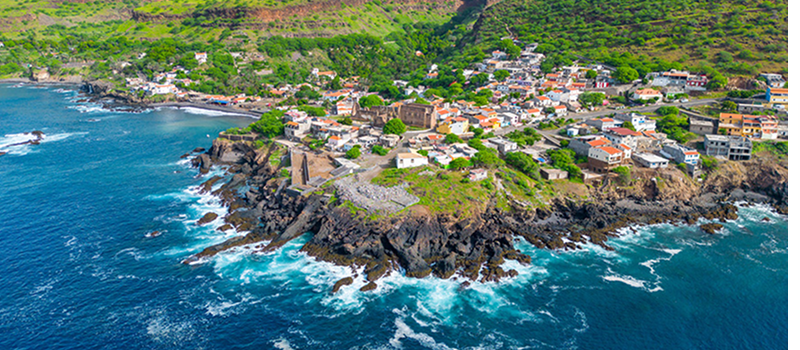
Cabo Verde is a destination year-round, but the best window runs from November through June, when the days are dry and breezy, and temperatures hover around 77°F. August through early October runs hotter with the occasional short shower. If kitesurfing is your reason for going to Cabo Verde, then plan around the windy months of November and April.
Getting There And Entry Rule You Cannot Skip
There are direct flights from the US East Coast, with a flight from Boston to Cabo Verde taking about 7.5 hours. Otherwise, most routes connect through Lisbon on TAP Air Portugal. You will likely land at Sal (SID), Boa Vista (BVC), or Praia (RAI).
The entry process is simple but not optional. US citizens do not need a visa for stays of up to 30 days, yet everyone must complete EASE pre-registration online at least 5 days before flying and pay the Airport Security Tax of roughly $31. Make sure your passport is valid for at least 6 months, and keep your first hotel booking on hand.
Explore Cabo Verde This Summer With Maya Mobile
Cabo Verde spent decades known mainly for its beaches, and now the whole world knows its football team too. If the World Cup run is what brought this country to your attention, let it be the reason you book the trip. Just download the Maya mobile app and sort your connection on this island to make the most of your trip.
Also Read: Wimbledon 2026 Guide: How to Stay Connected in London